Teeth Whitening for Sensitive Teeth: Is It Still Possible?
Sensitive teeth can often still be professionally whitened. Learn why sensitivity happens, which warning signs matter, and how treatment may be adjusted.
Written and medically reviewed by Dr. Trần Ngọc Sơn, Dentist
Published
Updated
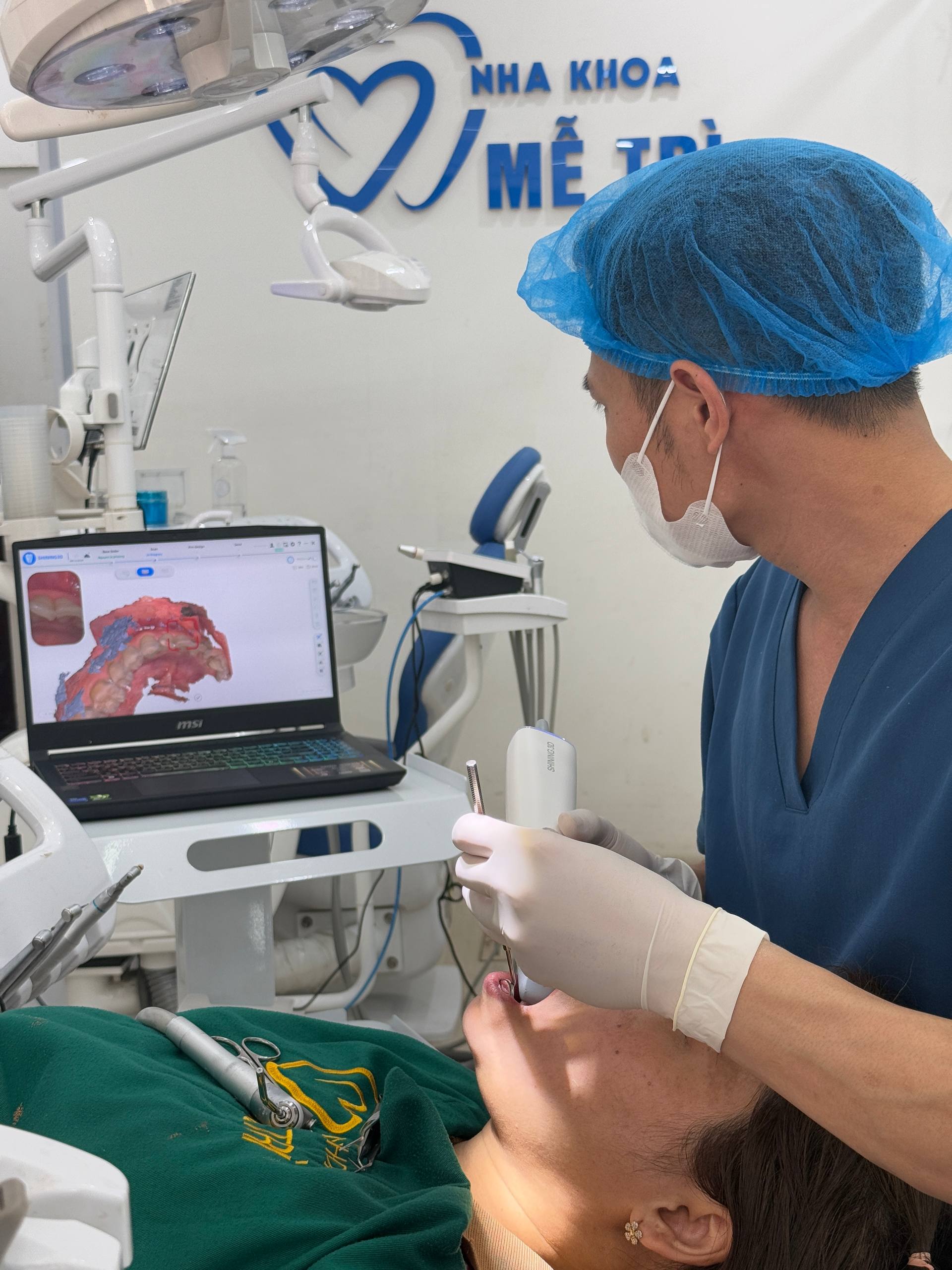
Yes. People with sensitive teeth can often still have professional Teeth Whitening. Before treatment, however, the dentist should consider why the teeth are sensitive and whether problems such as tooth decay, exposed root surfaces, cracks, damaged fillings or gum inflammation need attention first.
Temporary sensitivity to cold or temperature changes is one of the most common side effects of Teeth Whitening. It can occur with both professional at-home whitening and in-clinic whitening and is usually temporary.
Strong, unusual, persistent or very localized pain is different. If one tooth becomes particularly painful or symptoms do not settle as expected, the tooth should be assessed rather than simply continuing the whitening treatment.
Teeth Whitening and sensitive teeth at a glance
Sensitivity alone does not determine which whitening method should be used. The condition of the teeth, gums and restorations also matters.
Have sensitive teeth and considering whitening?
Me Tri Dental Clinic can examine your teeth and gums first, discuss the source of the sensitivity and explain whether professional at-home or in-clinic whitening is appropriate.
What does tooth sensitivity feel like?
Tooth sensitivity is usually described as a brief, sharp or uncomfortable response to a trigger. It may affect one tooth or several teeth.
Possible symptoms include:
- brief sharp pain with cold drinks
- reaction to hot foods
- sensitivity to sweet foods
- discomfort with acidic foods or drinks
- sensitivity during brushing
- discomfort around exposed tooth necks
- one sensitive tooth
- several sensitive teeth
Tooth sensitivity is a symptom, not a diagnosis. Different causes can require different approaches, which is why the pattern of sensitivity matters before cosmetic whitening begins.
Why might your teeth be sensitive before whitening?
Teeth may already be sensitive for several reasons. Possible causes can include:
- exposed dentin or root surfaces
- gum recession
- tooth decay
- cracks
- damaged or leaking fillings
- tooth wear
- erosion
- recent dental treatment
- restoration-related issues
- individual sensitivity
Symptoms alone do not confirm the cause.
Sensitivity that is new, severe or clearly limited to one tooth deserves particular attention before elective whitening. A generalized response to cold across several teeth is different from one tooth that has become strongly painful.
Why should sensitivity be discussed before Teeth Whitening?
Discussing sensitivity before treatment helps the dentist understand whether whitening can proceed normally or whether another issue needs attention first.
The assessment can help determine:
- whether whitening itself is appropriate
- whether a specific tooth needs treatment first
- whether the whitening plan should be modified
- whether existing restorations are relevant
- whether sensitivity is generalized or localized
An examination cannot guarantee that whitening sensitivity will not occur. It helps identify avoidable problems and supports a more appropriate treatment plan.
For a broader overview of available methods, see professional Teeth Whitening in Hanoi.
Why can Teeth Whitening make teeth sensitive?
Professional whitening uses peroxide-based agents to change color molecules within the natural tooth. During this process, some patients experience temporary increased sensitivity.
Temporary sensitivity is a recognized and common side effect of tooth whitening, but not everyone experiences it and the intensity can vary.
Whitening sensitivity should not be explained as the enamel being "removed", the tooth developing permanent "open pores", or the whitening agent "burning the nerve". These descriptions are misleading and can make a temporary side effect sound like permanent structural damage.
Does sensitivity after whitening mean your teeth were damaged?
Not automatically.
Temporary mild-to-moderate sensitivity can occur during whitening without meaning that the tooth has been permanently damaged.
What matters is the pattern and severity of the symptoms. Severe pain, pain that continues unexpectedly or pain strongly focused on one tooth should be assessed rather than assumed to be a routine whitening effect.
Temporary sensitivity vs toothache
This table is only a general guide. It does not diagnose the cause of pain.
What should be checked before whitening sensitive teeth?
Before whitening, the dentist may assess:
- tooth sensitivity
- cavities
- cracked teeth
- damaged restorations
- gum condition
- gum recession
- exposed root surfaces
- current tooth pain
- crowns or veneers
- visible fillings
- discoloration type
- oral hygiene
The initial consultation and dental examination at Me Tri Dental Clinic are free.
Professional cleaning may be recommended if plaque, calculus or substantial surface staining is present, but cleaning is not a mandatory step for every whitening patient.
If your teeth look yellow but also have heavy deposits, the separate guide on Air polishing or Teeth Whitening for yellow teeth with heavy plaque explains that distinction in more detail.
When might Teeth Whitening need to be postponed?
Whitening is an elective cosmetic treatment, so active dental problems may need attention first.
Examples can include:
- untreated tooth decay
- unexplained toothache
- significant inflammation
- damaged or leaking restorations
- suspicious crack-related symptoms
- substantial unexplained sensitivity
- other active dental conditions
Postponing whitening does not necessarily mean it can never be done. The underlying issue may first need to be treated and the whitening plan reassessed afterward.
There is no universal waiting period that applies to every dental condition or recent treatment.
Can you whiten teeth if you have receding gums?
Gum recession does not automatically rule out whitening, but exposed root surfaces can already be sensitive and should be assessed before treatment.
The plan should consider:
- degree of recession
- exposed surfaces
- existing sensitivity
- gum condition
- restorations
- whitening area
Some patients with recession may still be suitable for professional whitening, while others may need the sensitivity or another dental issue addressed first.
What if you have exposed tooth necks?
Exposed tooth necks may be more sensitive than enamel-covered tooth surfaces. The dentist should assess the area and determine whether the whitening plan needs to be adjusted.
It is not appropriate to promise that exposed areas will never become sensitive or that exposed roots will whiten exactly like enamel.
Is professional at-home whitening suitable for sensitive teeth?
It can be suitable for selected patients. One practical advantage is that the whitening schedule can be adjusted according to the patient's response and professional instructions.
At Me Tri Dental Clinic, professional at-home Teeth Whitening currently costs 1,700,000 VND and includes:
- custom-made whitening trays
- 2 tubes of whitening gel
- fitting and instructions as part of clinical delivery
At-home whitening can still cause temporary sensitivity. It is not automatically the gentler or better option for every person with sensitive teeth.
Its main practical advantage in a sensitivity-focused plan is that frequency or wearing time can be adjusted according to professional instructions.
What should you do if Home Whitening makes your teeth sensitive?
If sensitivity develops while using professional Home Whitening:
- follow the instructions supplied by the clinic
- do not increase gel quantity
- do not extend wearing time independently
- frequency may need adjustment
- wearing time may need adjustment
- treatment may need to be paused
- contact the clinic if symptoms are strong, unusual or persistent
Any change to the application schedule should be made according to individual professional instructions.
Do not assume that everyone should stop for the same number of hours or days. There is no universal restart schedule that is suitable for every patient.
Can people with sensitive teeth have in-clinic whitening?
Yes, selected patients can.
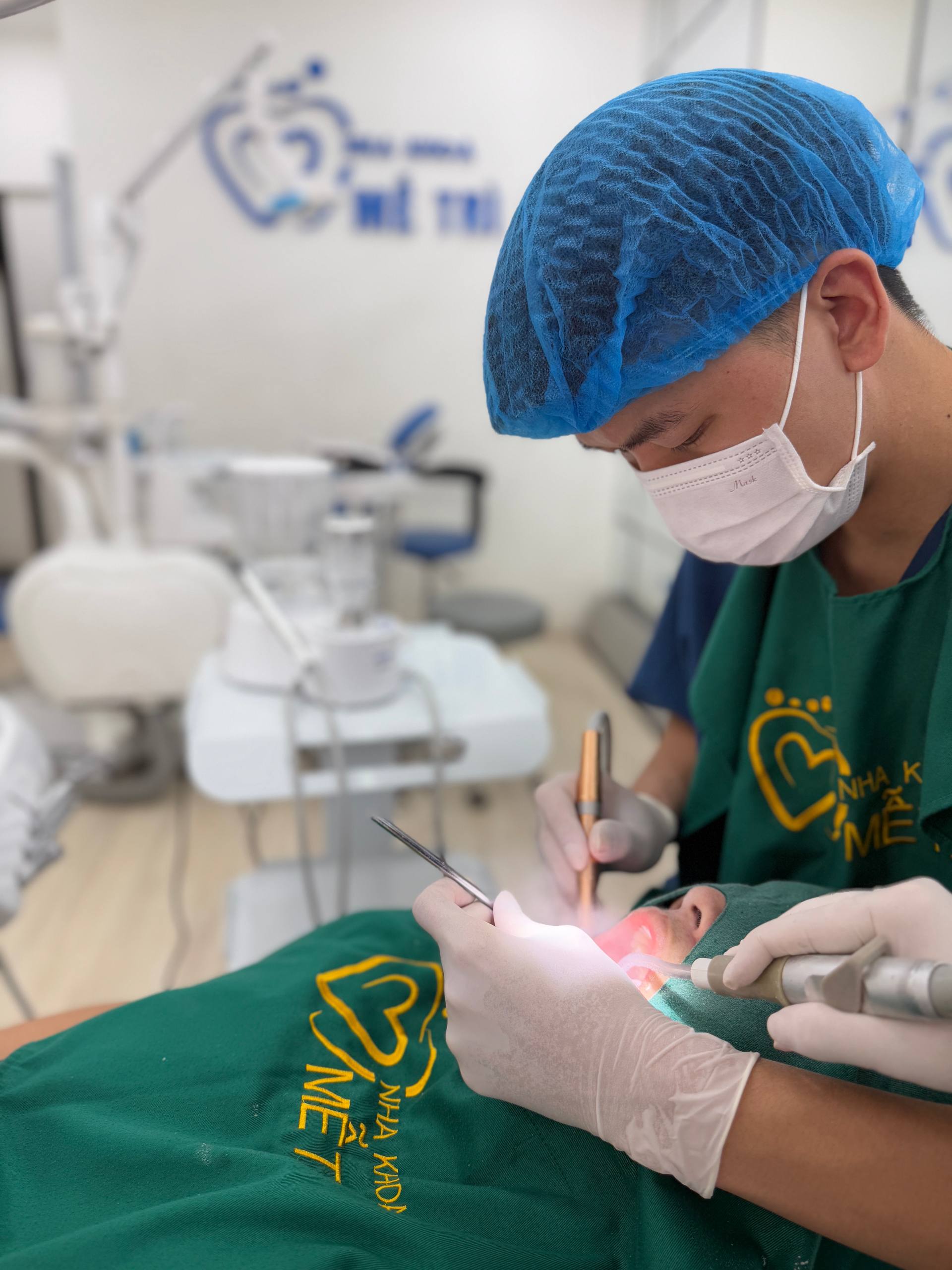
At Me Tri Dental Clinic, the current in-clinic laser Teeth Whitening price is 3,000,000 VND.
The clinic workflow includes:
- examination
- gum and soft-tissue protection
- professional whitening gel
- laser or light activation under the clinic's protocol
- clinical monitoring
- sensitivity guidance
- aftercare guidance
The clinic publicly describes this treatment as laser Teeth Whitening. That terminology does not mean the light makes treatment pain-free, prevents sensitivity, guarantees stronger whitening or makes the procedure automatically safer.
Temporary sensitivity can also occur with in-clinic whitening. The dental team can monitor the patient's response during the appointment, but professional supervision does not guarantee that sensitivity will not occur afterward.
Home Whitening or in-clinic whitening: which is better for sensitivity?
Neither method is automatically better for everyone with sensitive teeth.
Method selection should consider the complete clinical situation rather than sensitivity alone.
For a detailed comparison of package inclusions and charges, see Teeth Whitening costs in Hanoi. This sensitivity article keeps pricing secondary because the more important question is whether the teeth and gums are suitable for whitening and how the patient responds.
Having sensitive teeth does not automatically create a separate whitening surcharge. If the examination identifies an underlying dental problem that requires treatment before whitening, that separate treatment may have its own cost.
Can you whiten teeth if you have cavities?
Active tooth decay may need treatment before cosmetic whitening begins.
The dentist should first determine whether the tooth requires treatment and when whitening can appropriately begin. A cavity does not mean whitening is permanently excluded, but an active problem should not simply be ignored.
What if one tooth is very sensitive or possibly cracked?
A tooth with strong localized sensitivity, pain when biting or suspected structural damage should be assessed before elective whitening.
These symptoms do not prove that the tooth is cracked. They are reasons for the dentist to examine the tooth before continuing with a cosmetic procedure.
Similarly, an existing filling may need treatment first if it is damaged, leaking, associated with recurrent decay or linked to pain. This does not mean every filling must be replaced before whitening.
Do fillings, crowns or veneers respond to whitening?
No. Whitening changes the shade of natural teeth but does not lighten tooth-colored restorations in the same way.
This includes:
- composite fillings
- crowns
- veneers
- bridges
- Implant crowns
Existing restorations matter for both shade planning and dental assessment, but their presence does not automatically mean whitening is unsuitable.
Restoration shade planning is a separate topic from tooth sensitivity and should be considered independently.
What if you recently had dental treatment?
If a tooth has recently been treated and remains sensitive, tell the dentist before starting whitening. Whether treatment should proceed immediately depends on the tooth and the procedure performed.
There is no single fixed waiting period that applies after every filling, crown, root canal procedure or other dental treatment.
How long can teeth stay sensitive after whitening?
Whitening sensitivity is often temporary, but there is no single duration that applies to every patient.
Symptoms should generally improve after treatment is completed or the whitening plan is adjusted. Strong or persistent symptoms should be assessed.
The duration and intensity of sensitivity can vary with factors such as individual response, the whitening protocol, contact time, whitening-agent concentration, existing sensitivity and the condition of the teeth and restorations.
For that reason, the clinic does not promise that every patient's sensitivity will resolve within an exact number of hours or days.
Should you take painkillers before whitening?
Do not routinely self-medicate before whitening solely to prevent possible sensitivity. Discuss significant existing sensitivity or previous severe whitening discomfort with the dentist first.
Depending on the situation, the dentist may recommend an appropriate sensitivity-management product or toothpaste.
A toothpaste intended for sensitive teeth may be recommended as part of the individual plan, but it should not be presented as a guaranteed way to prevent all whitening sensitivity or make treatment pain-free.
Can whitening irritate the gums?
Yes. Whitening gel can temporarily irritate soft tissues if it contacts them.
For in-clinic whitening, gum protection is used as part of the procedure.
For Home Whitening, custom trays, the correct gel quantity and proper instructions can help reduce unnecessary soft-tissue exposure.
Do not use additional gel in an attempt to improve the result. If gel repeatedly contacts or irritates the gums, check the amount being used and contact the clinic for guidance.
Do not modify whitening trays yourself unless the clinic specifically instructs you to do so.
What about hot and cold foods?
Very cold or very hot foods and drinks may feel uncomfortable while the teeth are temporarily sensitive. Reducing these triggers for a short period can make the whitening experience more comfortable.
Long-term staining habits affect color maintenance but are separate from the question of sensitivity.
Does professional whitening remove enamel?
Whitening is a chemical color-changing treatment, not a procedure that intentionally drills or removes tooth structure.
Professional assessment and appropriate use of whitening products remain important, particularly when teeth are already sensitive.
Sensitive teeth are also not an automatic reason to choose veneers instead of whitening. Veneers are a restorative treatment with different indications and treatment requirements.
For short-stay patients in Hanoi
If you are in Hanoi for a short stay, mention both your available time and any history of sensitive teeth when booking. This helps the clinic plan the examination and discuss whether an in-clinic or at-home option is practical.
The clinic should not promise same-day whitening, guaranteed tray preparation or completion within a particular travel window before examining your teeth and confirming the plan.
Consultation, treatment explanation, pricing, sensitivity guidance and aftercare communication are available in English at Me Tri Dental Clinic.
When should you contact the dentist about whitening sensitivity?
Contact the clinic if:
- pain is strong
- symptoms are unusual
- pain is clearly limited to one tooth
- pain occurs when biting
- there is swelling
- the gums are significantly irritated
- symptoms remain pronounced
- you are unsure whether to continue Home Whitening
If symptoms become strong or unusual during Home Whitening, pause the whitening process and contact the clinic for advice rather than simply continuing the same schedule.
Do not restart on a universal timetable. The next step should depend on the symptoms and the professional guidance provided for your case.
What should you tell the dentist before whitening?
Before whitening, tell the dentist:
- whether your teeth are currently sensitive
- which teeth are sensitive
- whether cold or heat triggers the symptoms
- whether one tooth hurts more than the others
- whether you recently had fillings or other dental treatment
- whether you have crowns or veneers
- whether you have gum recession
- whether you have whitened your teeth before
- whether previous whitening caused sensitivity
- whether you currently have toothache
- whether you already prefer Home Whitening or in-clinic whitening
These details help the dentist distinguish a general sensitivity history from symptoms that may need separate assessment.
How is Teeth Whitening planned when you have sensitive teeth?
A practical planning sequence is:
- Discuss current sensitivity.
- Identify whether one or several teeth are affected.
- Examine the teeth and gums.
- Check for cavities or damaged restorations.
- Assess exposed root surfaces or recession.
- Review visible crowns, veneers and fillings.
- Determine whether whitening can proceed.
- Discuss professional Home Whitening and in-clinic whitening.
- Consider sensitivity history and patient preference.
- Provide the appropriate usage or treatment instructions.
- Monitor the response during treatment.
- Adjust or pause treatment when clinically appropriate.
- Reassess unusual or persistent symptoms.
This approach treats sensitivity as an important planning factor without assuming that sensitive teeth automatically exclude whitening.
Frequently asked questions
Can you whiten sensitive teeth?
Yes. Many people with sensitive teeth can still have professional Teeth Whitening, but the dentist should first consider why the teeth are sensitive and whether another dental problem needs treatment.
Does Teeth Whitening make your teeth sensitive?
It can. Temporary tooth sensitivity is one of the most common side effects of professional whitening.
Does whitening sensitivity mean the tooth is damaged?
Not automatically. Temporary sensitivity can occur without permanent damage, but strong, persistent or highly localized pain should be assessed.
Is Home Whitening better for sensitive teeth?
Not automatically. Professional Home Whitening can still cause sensitivity, although the application schedule can be adjusted according to the dentist's instructions.
Is laser Teeth Whitening more painful?
Not necessarily. Sensitivity varies between patients and can occur with either professional whitening approach.
Can laser whitening prevent sensitivity?
No. The clinic uses a laser or light-assisted whitening protocol, but light activation should not be presented as a guarantee that sensitivity will not occur.
What should I do if Home Whitening makes my teeth sensitive?
Do not increase the amount of gel or extend the wearing time. Follow the instructions provided, and contact the clinic if symptoms are strong, unusual or persistent. The whitening schedule may need adjustment or a temporary pause.
How long does sensitivity last after whitening?
It is often temporary, but there is no exact duration that applies to everyone. Persistent or severe symptoms should be checked.
Can I whiten if I have receding gums?
Possibly. Recession can expose sensitive root surfaces, so the condition and existing sensitivity should be assessed before whitening.
Can I whiten if I have cavities?
Active tooth decay may need treatment before cosmetic whitening. The dentist should first determine whether whitening can safely proceed.
Do crowns, veneers and fillings whiten?
No. Professional whitening changes the shade of natural teeth but does not lighten these restorative materials in the same way.
How much does Home Whitening cost?
Professional at-home Teeth Whitening at Me Tri Dental Clinic currently costs 1,700,000 VND and includes custom-made trays and 2 tubes of whitening gel.
How much does in-clinic whitening cost?
In-clinic laser Teeth Whitening currently costs 3,000,000 VND.
Is the examination before whitening free?
Yes. The initial dental consultation and examination are free.
Sensitive teeth do not automatically rule out professional whitening
Me Tri Dental Clinic can examine your teeth and gums, discuss the source of your sensitivity and explain whether professional at-home or in-clinic Teeth Whitening is appropriate for your situation.
About the author

Dr. Trần Ngọc Sơn
Dentist
9 years of experience
Professional license: 035239/BYT-CCHN
Questions about your own case?
Message us on Zalo or WhatsApp, or book a visit so the dentist can examine you and explain your options in Me Tri, Hanoi.


Related services
- Teeth Whitening
Teeth whitening helps improve discolored teeth and enhances the aesthetics of your smile.