
Wisdom Tooth Removal in Hanoi
Clear pricing, local anesthesia, imaging guidance, and practical aftercare for English-speaking patients in Hanoi.
Last updated: July 27, 2026
Book a Wisdom Tooth Examination in Hanoi
Use the booking link, phone, Zalo, or WhatsApp to arrange an examination and receive a treatment estimate after assessment.
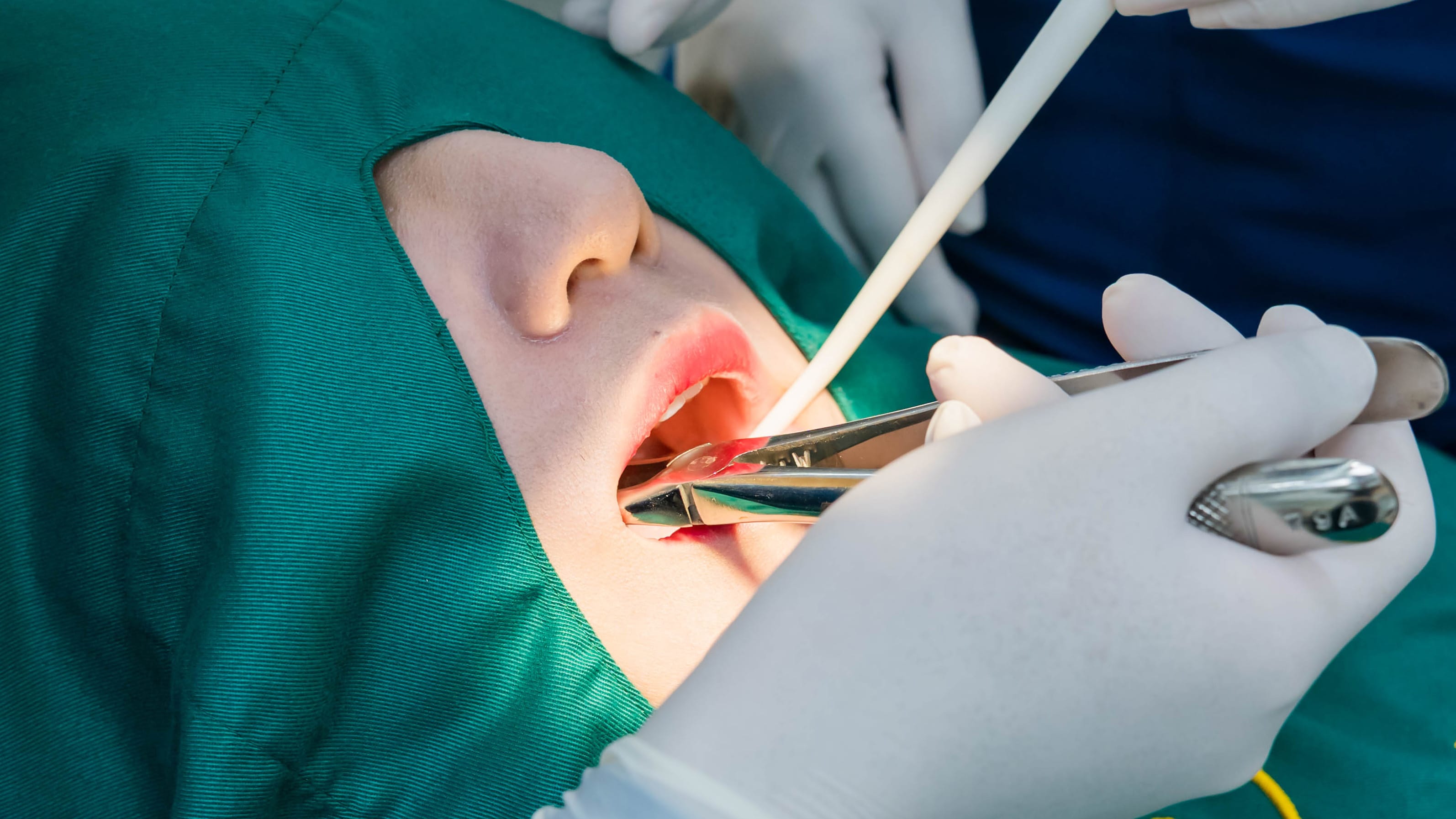
Wisdom Tooth Examination and Removal in Hanoi
Wisdom tooth removal, also called wisdom tooth extraction or third molar extraction, may be considered when a tooth is impacted, angled, repeatedly inflamed, difficult to clean, or affecting the neighboring second molar. Not every wisdom tooth needs to be removed. A healthy tooth that is properly positioned, cleanable, and not damaging nearby tissues may sometimes be monitored.
Before recommending treatment, the dentist examines the tooth position, surrounding gum, mouth opening, neighboring tooth, and relevant medical history. A panoramic X-ray, localized dental X-ray, or CBCT scan may be recommended when more anatomical information is needed. Imaging is charged separately, and CBCT is not required for every case.
The initial consultation and examination are free. Wisdom tooth removal costs VND 1,000,000-4,000,000 per tooth. The final plan and cost are confirmed after examination and appropriate imaging.
Wisdom Tooth Removal, Prices, and Treatment Planning
Key facts
- Wisdom tooth removal: VND 1,000,000-4,000,000 per tooth
- Approximate reference: USD 38-152 per tooth
- Upper wisdom tooth removal: VND 1,000,000-2,000,000 per tooth
- Lower wisdom tooth removal: VND 1,700,000-4,000,000 per tooth
- Free initial consultation and examination
- Local anesthesia included
- Diagnostic imaging charged separately when required
- Same-day examination and removal may be possible when clinically appropriate
- Up to two wisdom teeth in the same jaw may be removed during one appointment
- Straightforward erupted tooth: approximately 15-30 minutes
- More complex surgical removal: approximately 30-60 minutes
- Follow-up examination, suture removal, and an urgent postoperative check are included
USD amounts are approximate references based on the exchange rate used on July 20, 2026. Final prices are confirmed and paid in VND.
What is a wisdom tooth?
Wisdom teeth are the last molars at the back of the upper and lower jaws. They may erupt normally, grow at an angle, remain partially covered by gum, lie horizontally, or stay fully within the jawbone. The term "impacted wisdom tooth" describes a tooth that cannot erupt fully because of its position, available space, or surrounding structures.
The dentist may need imaging to assess the root shape and the tooth's relationship with the lower jaw nerve canal, the upper jaw sinus, or the neighboring second molar.
Not every wisdom tooth needs removal
Monitoring may be appropriate when the tooth:
- Has erupted in a favorable position
- Has enough space around it
- Can be brushed and cleaned effectively
- Is not causing recurrent pain or inflammation
- Is not damaging the second molar
- Has no significant gum disease or abnormality around it
- Does not interfere with orthodontic, restorative, or other dental treatment
The decision should be based on symptoms, examination, cleaning access, and suitable diagnostic imaging rather than appearance alone.
When removal may be recommended
The dentist may discuss removal when a wisdom tooth is angled, horizontal, partially erupted, impacted, or fully within bone. Other reasons can include recurrent pericoronitis, pain, swelling, food trapping, decay, infection, damage to the neighboring second molar, suspected root resorption, difficulty cleaning the area, or an abnormal finding on imaging.
Symptoms do not automatically mean immediate removal. The dentist first identifies the cause, assesses active inflammation, and considers the risks and benefits of treatment.
Wisdom tooth removal prices in Hanoi
Prices by jaw
Detailed prices for lower wisdom teeth
These erupted, angled, and impacted classifications apply to lower wisdom teeth. "Grade 1 impacted wisdom tooth" is the clinic's price-list classification. The dentist confirms the degree of impaction after examination and imaging.
The cost depends on the jaw, direction of eruption, depth of impaction, root shape, accessibility, and relationship with nearby anatomical structures. Listed prices exclude VAT. A VAT invoice can be issued on request.
Separately charged supportive services
PRF and supportive injections are optional services used only when the dentist considers them clinically appropriate. They may support recovery in selected cases, but they do not guarantee no pain, swelling, delayed healing, or complications.
What the removal price includes
The confirmed extraction price includes:
- Clinical assessment before removal
- Assessment of the surrounding gum and neighboring second molar
- Local anesthesia
- Routine or surgical removal according to the treatment plan
- Tooth sectioning and limited bone removal when required
- Cleaning and irrigation of the extraction socket
- Sutures when required
- Gauze and postoperative instructions
- Follow-up examination
- Suture removal
- Urgent postoperative examination when required
Diagnostic imaging, PRF, supportive injections, and additional treatment are charged separately when required.
Possible additional costs
Additional charges may apply for:
- Panoramic X-ray, localized dental X-ray, or CBCT scan
- Treatment to control acute inflammation before removal
- Treatment for decay or damage to the second molar
- Periodontal treatment
- Medical consultation or testing when required
- Additional treatment for a postoperative complication
The dentist explains the reason, options, and cost before providing an additional service.
X-rays and CBCT
Diagnostic imaging helps assess tooth direction, depth of impaction, root shape, the neighboring second molar, and nearby anatomical structures. A CBCT scan may be considered when a lower wisdom tooth appears close to the nerve canal, the tooth is deeply or fully impacted, the roots are difficult to assess, two-dimensional imaging is insufficient, or an abnormality is suspected.
Not every wisdom tooth requires CBCT. The dentist selects the imaging method according to the information needed for treatment planning.
Local anesthesia and pain control
Wisdom tooth removal is performed with local anesthesia, which is included in the removal price. Local anesthesia helps control pain during the procedure, although pressure, movement, vibration, or pushing may still be felt.
The clinic provides local anesthesia only. Conscious sedation and intravenous sedation are not provided. After the anesthesia wears off, discomfort and swelling vary with the complexity of the procedure and the individual healing response.
Medication after removal
The clinic does not sell medication. When medication is clinically indicated, the dentist provides a prescription and instructions, and the patient purchases the medication from a pharmacy.
Not every patient needs antibiotics. Tell the dentist about drug allergies, current medication, supplements, pregnancy or possible pregnancy, and previous reactions to local anesthesia. Do not stop prescribed medication or change a dose without appropriate medical or dental guidance.
Examination and removal process
- Discuss symptoms, medical history, medication, and allergies.
- Examine the wisdom tooth area, surrounding gum, neighboring tooth, and mouth opening.
- Recommend suitable diagnostic imaging when required.
- Assess tooth direction, degree of impaction, root shape, and nearby anatomy.
- Explain treatment options, risks, expected recovery, and cost.
- Confirm whether same-day removal is appropriate.
- Administer local anesthesia.
- Access and remove the tooth, with sectioning or limited bone removal when required.
- Clean and irrigate the socket.
- Place sutures when required and position gauze.
- Provide written or verbal aftercare, prescription guidance, and follow-up instructions.
Same-day examination and removal
Examination and removal may be completed on the same day when the dentist has reviewed the patient's health, tooth condition, and necessary imaging and determines that treatment can proceed appropriately.
Another appointment may be needed when acute inflammation should be controlled first, further imaging or medical assessment is required, the case needs additional planning, or there is not enough time to complete the procedure properly.
How long does removal take?
A fully erupted and accessible wisdom tooth may take approximately 15-30 minutes. An angled, impacted, or surgically complex tooth may take approximately 30-60 minutes. These are estimates rather than guarantees.
Treatment time varies with the jaw, tooth direction, degree of impaction, root shape, inflammation, mouth opening, need for tooth sectioning, limited bone removal, sutures, and the number of teeth treated.
Removing two wisdom teeth in one appointment
Up to two wisdom teeth may be removed during one appointment when the patient's health and the complexity of the teeth are suitable. Both teeth must be in the same jaw, such as both upper wisdom teeth or both lower wisdom teeth.
When several wisdom teeth require removal, treatment is planned within a maximum of two extraction appointments. The clinic does not remove all four wisdom teeth during one appointment.
Painful or inflamed wisdom teeth
A painful or inflamed wisdom tooth cannot always be removed immediately. The dentist assesses swelling, signs of infection, mouth opening, fever, swallowing discomfort, general health, and whether local anesthesia is likely to work effectively.
The dentist may proceed the same day, schedule removal later, or recommend controlling the acute condition first.
Medical screening before removal
Tell the dentist about blood-thinning medication, bleeding disorders, diabetes, high blood pressure, heart conditions, allergies, pregnancy, current medication and supplements, recent illness, smoking, alcohol use, and relevant medical or surgical history.
Do not stop prescribed medication on your own. The dentist may request medical information or contact another treating doctor when necessary.
Risks and limitations
Wisdom tooth removal is a common procedure, but possible risks include pain, swelling, bruising, bleeding, limited mouth opening, infection, dry socket, delayed healing, damage to a neighboring tooth or restoration, temporary altered sensation, and the need for additional treatment.
For some lower wisdom teeth close to a nerve, altered sensation may rarely persist. Selected upper wisdom tooth cases may involve communication with the sinus. In some cases, a small root fragment may be retained when removing it would create greater risk. The dentist explains the risks most relevant to the tooth position and imaging findings before treatment.
Recovery and aftercare
Early recovery often takes about 3-7 days, but the experience varies. Pain and swelling may be more noticeable after an impacted or complex removal. Light work or school may be possible after about 1-2 days following a straightforward case when recovery is comfortable, while more complex treatment may require several days.
After treatment:
- Bite on gauze as instructed
- Avoid forceful rinsing or spitting during the initial healing period
- Avoid drinking through a straw during the initial period
- Do not smoke and avoid alcohol
- Choose soft foods that are unlikely to become trapped in the socket
- Do not touch the socket with fingers or objects
- Take medication only as prescribed
- Maintain gentle oral hygiene without traumatizing the area
- Rest and follow the individual instructions provided
Contact the clinic for bleeding that cannot be controlled, pain that becomes significantly worse, rapidly increasing swelling, fever, pus, unusual odor, medication reaction, persistent numbness, difficulty opening the mouth, loose sutures, or any symptom that causes concern. Difficulty breathing or swallowing requires urgent assessment.
Follow-up and suture removal
Scheduled follow-up, suture removal, and an urgent postoperative examination for unexpected symptoms are included. Non-dissolvable sutures are commonly removed around 7-10 days after treatment, depending on healing.
Additional treatment for a complication may be charged separately according to the cause, severity, and care required. The dentist explains the treatment and cost before proceeding.
Payment and VAT
The final cost is confirmed after examination and appropriate imaging. Full payment applies according to the confirmed treatment plan. Prices are paid in VND and exclude VAT. A VAT invoice is available on request.
Clinic Access and Appointment Planning in Hanoi
Nha Khoa Mễ Trì provides wisdom tooth examinations and removal for English-speaking patients in Hanoi. The clinic is located at số 123, ngõ 32 Đỗ Đức Dục, Mễ Trì, Từ Liêm, Hà Nội. When booking, confirm the available appointment time and allow enough time for examination, imaging when required, treatment discussion, and possible removal.
For a more useful assessment, share your symptoms, how long they have been present, current medication, allergies, relevant medical conditions, and any recent dental X-rays. A painful or swollen wisdom tooth may still require assessment before the dentist can confirm whether removal should happen immediately or after the acute condition is controlled.
Visitors should provide their departure date, flight schedule, and important work or travel commitments. Same-day examination and removal may be possible, but it is not guaranteed. Deeply impacted teeth may require additional imaging and planning, and non-dissolvable sutures may require a follow-up visit for removal. No fixed waiting period before flying is assumed; the dentist considers the treatment complexity, healing expectations, and itinerary individually.
Consultation, imaging explanations, treatment options, local anesthesia information, aftercare, prescription guidance, and follow-up communication are available in English. Patients can use the booking link, phone, Zalo, or WhatsApp to request an appointment. Current appointment availability and opening hours should be confirmed before visiting.
Patient reviews
Patient Experiences After Wisdom Tooth Removal
Read real experiences about the consultation, local anesthesia, wisdom tooth removal, recovery, and postoperative care instructions.

Tùng TT
June 30, 2026
"The clinic is always busy, I booked an appointment and got treated right away. I had 3 wisdom teeth extracted and 5 teeth filled at the dental clinic. The extraction process was painless, the doctor was gentle. After the anesthesia wore off, there was a bit of discomfort but no need to take painkillers. For anyone who wants a painless and gentle tooth extraction like mine, I recommend using the additional pain relief and anti-swelling injection service.👌🏻👌🏻👌🏻👌🏻"

Phương Lữ
June 3, 2026
"Wisdom tooth extraction is quick and painless"

Bằng Lê
April 22, 2026
"I just had 4 wisdom teeth extracted here, it was gentle and painless, and they were attentive and caring during the process. On the first day, there was only slight mild pain. I also had fillings done here, the prices are reasonable, and the consultation was enthusiastic and thorough."

Say Đăng
April 17, 2026
"Very good, I had my wisdom tooth extracted here."

Quân Nguyễn
March 21, 2026
"I have had dental treatment here about 4-5 times. Once for scaling and wisdom tooth extraction on the upper left side (after extraction, I could eat broken rice that evening without pain). Once for gum inflammation where they drained the pus and applied medicine + gave me medication -> healed. Once for extracting 2 wisdom teeth on the right side, I was very afraid of pain at first, but after extraction, when the anesthesia wore off, it only hurt a little, took a pain-relief effervescent tablet and slept until morning. Overall, this place is okay, prices are reasonable, dentists are gentle and enthusiastic. I give 100 points."

Hoàng Bảo
March 20, 2026
"The dentist extracted the tooth quickly, without pain."
Service FAQ
Wisdom Tooth Removal FAQs
How much does wisdom tooth removal cost in Hanoi?
Wisdom tooth removal costs VND 1,000,000-4,000,000 per tooth. Upper wisdom tooth removal costs VND 1,000,000-2,000,000, while lower wisdom tooth removal costs VND 1,700,000-4,000,000 depending on tooth position and difficulty.
How much does upper wisdom tooth removal cost?
Upper wisdom tooth removal costs VND 1,000,000-2,000,000 per tooth. The final price is confirmed after examination and imaging when required.
How much does lower wisdom tooth removal cost?
Lower wisdom tooth removal costs VND 1,700,000-4,000,000 per tooth. A fully erupted lower wisdom tooth costs VND 1,700,000-2,000,000, while a fully bony impacted tooth costs VND 3,000,000-4,000,000.
What does Grade 1 impacted wisdom tooth mean?
"Grade 1 impacted wisdom tooth" is the classification used in the clinic's price list. The dentist confirms the degree of impaction after examination and imaging. Removal costs VND 2,500,000 per tooth.
Does every wisdom tooth need removal?
No. A wisdom tooth may be monitored when it is healthy, properly positioned, cleanable, and not damaging the neighboring tooth or surrounding tissues.
Does wisdom tooth removal hurt?
Local anesthesia helps control pain during the procedure, although pressure, movement, vibration, or pushing may still be felt. Pain and swelling after the anesthesia wears off vary according to the complexity of the removal.
Is local anesthesia included, and does the clinic provide sedation?
Local anesthesia is included in the removal price. The clinic provides local anesthesia only and does not provide conscious sedation or intravenous sedation.
Is an X-ray required before wisdom tooth removal?
The dentist decides whether a panoramic X-ray, localized dental X-ray, or other imaging is needed after examination. Imaging helps assess tooth position, roots, the neighboring tooth, and nearby anatomy.
When is a CBCT scan required?
Not every case requires CBCT. It may be recommended when a lower tooth appears close to the nerve canal, is deeply impacted, has difficult-to-assess roots, or cannot be evaluated adequately with two-dimensional imaging.
Is diagnostic imaging included in the removal price?
No. Panoramic X-rays, localized dental X-rays, and CBCT scans are charged separately when clinically required.
How long does wisdom tooth removal take?
A straightforward erupted tooth may take approximately 15-30 minutes. An angled, impacted, or surgically complex tooth may take approximately 30-60 minutes.
Can examination and removal be completed on the same day?
Same-day examination and removal may be possible when the patient's health, tooth condition, imaging, and available treatment time allow. It is confirmed only after assessment.
Can two wisdom teeth be removed during one appointment?
Up to two wisdom teeth may be removed in one appointment when clinically appropriate. Both teeth must be in the same jaw.
Can all four wisdom teeth be removed at once?
No. The clinic does not remove all four wisdom teeth during one appointment. When several teeth require removal, treatment is planned within a maximum of two extraction appointments.
Can an inflamed wisdom tooth be removed immediately?
Not always. The dentist assesses swelling, infection, mouth opening, local anesthesia effectiveness, and general health before deciding whether removal can proceed or the acute condition should be controlled first.
Does every patient need antibiotics?
No. Medication is prescribed according to the clinical condition. The clinic does not sell medication; patients receive a prescription and instructions when medication is required.
How much do PRF and the supportive injection cost?
PRF costs VND 500,000 per tooth, and the supportive injection costs VND 500,000 per injection. Both are charged separately and used only when clinically appropriate.
When can I return to work or school?
After a straightforward removal, light work or school may be possible after about 1-2 days when recovery is comfortable. A more complex removal may require several days. Recovery varies by patient.
When are sutures removed, and is follow-up included?
Non-dissolvable sutures are commonly removed around 7-10 days after treatment, depending on healing. Scheduled follow-up, suture removal, and an urgent postoperative examination are included.
What should I eat after wisdom tooth removal?
Choose soft foods that are unlikely to irritate the area or become trapped in the socket. Avoid hard foods, forceful rinsing, straws during the initial period, smoking, and alcohol, and follow the dentist's individual instructions.
When should I contact the clinic after removal?
Contact the clinic for uncontrolled bleeding, worsening pain, rapidly increasing swelling, fever, pus, unusual odor, medication reaction, persistent numbness, difficulty opening the mouth, or concerning changes. Difficulty breathing or swallowing requires urgent assessment.
Can I have wisdom tooth removal while visiting Hanoi?
Same-day examination and removal may be possible when clinically appropriate. Share your departure date and flight schedule so the dentist can assess treatment timing, recovery, and follow-up needs individually.
Are the prices inclusive of VAT?
No. Listed prices exclude VAT. A VAT invoice can be issued on request, and full payment applies according to the confirmed treatment plan.
Can I receive consultation and instructions in English?
Yes. Consultation, treatment explanations, imaging review, aftercare instructions, prescription guidance, and follow-up communication are available in English.
Request a Wisdom Tooth Removal Consultation
Use the booking link, phone, Zalo, or WhatsApp to arrange an examination. The dentist will assess the wisdom tooth, surrounding gum, neighboring tooth, and imaging when required before explaining the plan, cost, and postoperative care.