
Yellow Teeth with Heavy Plaque: Should You Choose Air Polishing or Teeth Whitening?
Analysis of when to choose air polishing (professional cleaning) or teeth whitening for yellow, plaque-covered teeth. Guidance on making the right choice and important notes to consider.
Nha Khoa Mễ Trì
22 tháng 6, 2026
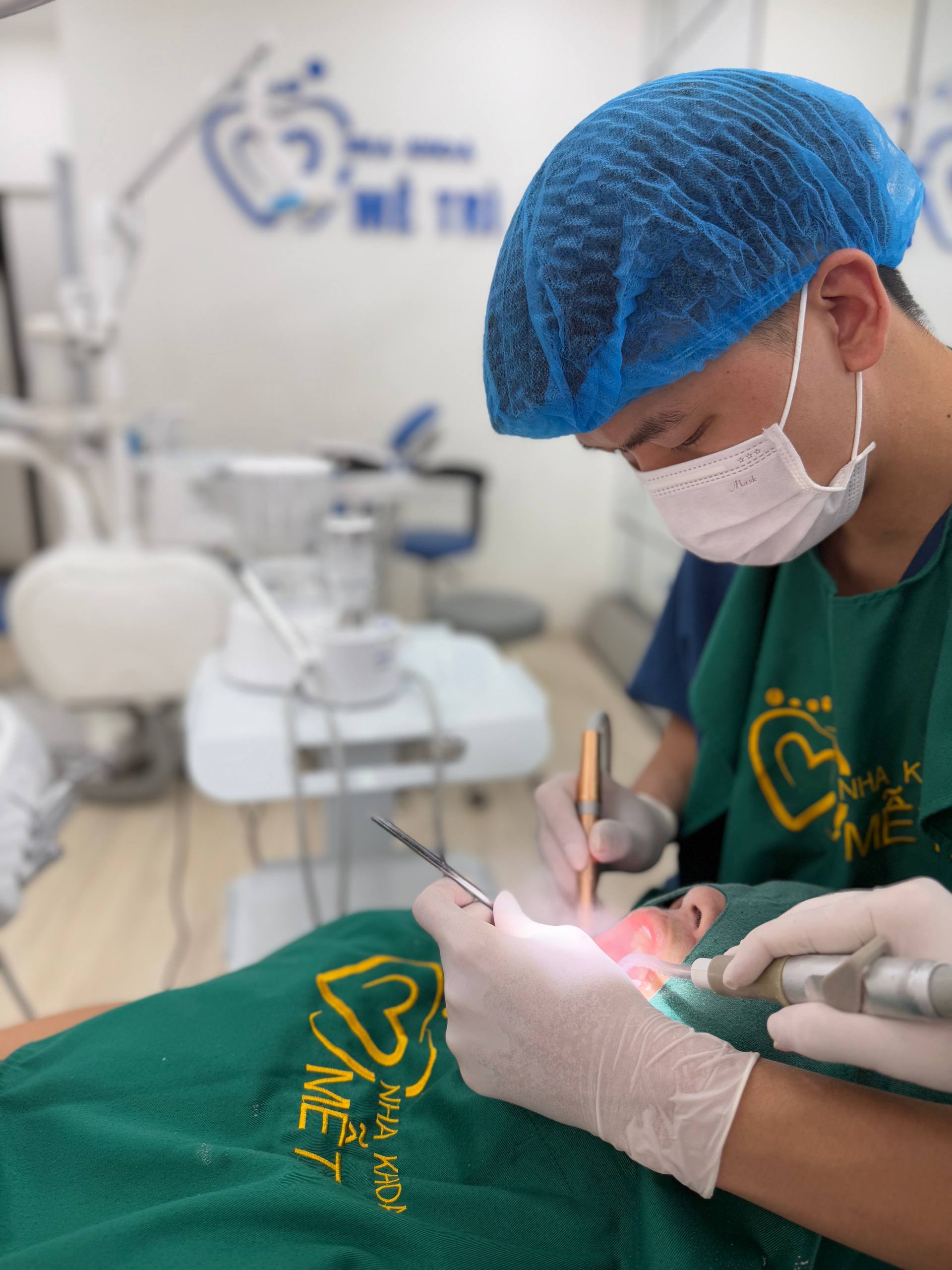
When Should You Choose Air Polishing or Teeth Whitening?
If your teeth are yellow and have heavy plaque, deciding between air polishing (professional cleaning) and teeth whitening depends on the cause of discoloration and your oral hygiene status. Air polishing is suitable when teeth are stained due to plaque, tartar, or surface stains. Teeth whitening should only be considered after plaque removal, and is intended for cases where teeth remain yellow due to deep intrinsic stains within the enamel.
Distinguishing Air Polishing from Teeth Whitening
Similarities and Differences
- Similarities: Both improve dental aesthetics, but have different goals and mechanisms.
- Differences: Air polishing focuses on cleaning the tooth surface, while whitening changes the color of the enamel.
When Should You Prioritize Air Polishing?
- Teeth have heavy plaque, tartar, or stains from coffee, tea, tobacco, or foods.
- Signs of bad breath, bleeding gums, or mild gingivitis.
- Haven't had a professional cleaning in the past 6 months.
Note: Air polishing is a necessary step before considering other cosmetic procedures, including teeth whitening. Whitening without first removing plaque will not be as effective and may irritate the gums.
See detailed information about the air polishing procedure here.
When Should You Consider Teeth Whitening?
- Teeth are already clean but remain yellow or discolored.
- Yellowing is caused by deep stains (food, aging, genetics).
- You want a noticeable improvement in tooth color for aesthetics.
Note: Teeth whitening is not suitable for everyone, especially if you have weak teeth, enamel erosion, prolonged sensitivity, or untreated gum disease. Always consult your dentist before proceeding.
Practical Checklist for Choosing the Right Option
- Observe Your Teeth:
- Are there heavy plaque, tartar, or surface stains? → Prioritize air polishing.
- Are teeth clean but still yellow or discolored? → Consider teeth whitening.
- Check Gum and Tooth Health:
- Any gum inflammation, bleeding, or sensitivity? → Treat these issues before whitening.
- Consult Your Dentist:
- Assess the cause of yellowing and choose the appropriate method.
- Follow Professional Advice:
- Always have a professional cleaning before whitening if plaque is present.
Important Notes
- Do not self-medicate with whitening products or home remedies without a dental check-up.
- Regular professional cleaning helps prevent gum disease, cavities, and maintains natural tooth color.
- Teeth whitening should be performed at a reputable dental clinic, under professional supervision.
- If yellowing is due to deeper causes (e.g., childhood antibiotic use), whitening may not be fully effective; other cosmetic options like porcelain veneers may be recommended.
Frequently Asked Questions
1. Does air polishing make teeth as white as whitening? No. Air polishing helps teeth look cleaner and brighter if stains are on the surface. If teeth remain yellow after cleaning, whitening may be needed.
2. Is it necessary to have a cleaning before whitening? Yes. Cleaning removes plaque and allows whitening agents to contact the enamel evenly, improving results and reducing irritation risk.
3. How often should I have my teeth professionally cleaned? Usually every 3-6 months, depending on your oral health and dentist's advice.
4. Does teeth whitening damage enamel? When done properly, whitening does not cause significant harm. However, mild temporary sensitivity may occur. Do not overuse or self-apply at home.
5. When should I see a dentist? If you have heavy plaque, persistent yellowing, sensitivity, or gum inflammation, visit a dental clinic for a check-up and personalized advice.
In summary: If your teeth are yellow with heavy plaque, prioritize air polishing first. If the color does not improve as desired, your dentist will assess and advise on whitening or other suitable solutions. For an accurate assessment, visit a dental clinic for a direct examination and personalized guidance.
Dịch vụ liên quan
Mặt dán sứ mỏng giúp cải thiện màu sắc và hình thể răng theo hướng bảo tồn.
Làm sạch mảng bám và cao răng giúp bảo vệ nướu và phòng ngừa bệnh răng miệng.
Tẩy trắng răng giúp cải thiện màu răng xỉn màu và tăng thẩm mỹ nụ cười.
Chủ đề liên quan
Khu vực phục vụ
Bạn cần lộ trình điều trị phù hợp?
Đặt lịch tư vấn với đội ngũ tại Mễ Trì, Hà Nội hoặc xem trước các dịch vụ trước khi đến khám.