
Porcelain Veneers vs. Dental Crowns: Which Method Should You Choose?
A detailed comparison between porcelain veneers and dental crowns: definitions, indications, pros and cons, procedures, and guidance on choosing the most suitable option for each case.
Nha Khoa Mễ Trì
3 tháng 7, 2026
Mục lục
- Quick Summary: Should You Choose Porcelain Veneers or Dental Crowns?
- Definitions of Both Methods
- Causes, Indications, and Risk Factors
- Symptoms and Signs Indicating the Need for Restoration
- Diagnostic Process and Choosing the Right Method
- Detailed Comparison: Porcelain Veneers vs. Dental Crowns
- Pros and Cons of Each Method
- Procedure Steps
- Real-World Procedure Illustration at the Clinic
- At-Home Care After Restoration
- Preventing Post-Restoration Issues
- When Should You See Your Dentist Immediately?
- Checklist: 5 Steps to Help You Choose the Right Method
- Frequently Asked Questions (FAQ)
Quick Summary: Should You Choose Porcelain Veneers or Dental Crowns?
Porcelain veneers and dental crowns are both popular cosmetic dental restoration solutions, each with its own advantages and specific indications. If you want to improve mild discoloration or minor shape issues and prioritize preserving your natural tooth structure, veneers are the ideal choice. In contrast, dental crowns are more suitable for teeth with extensive damage, large fractures, or when functional restoration is needed. The choice should be based on your dental condition, aesthetic needs, and consultation with a dental specialist.
Definitions of Both Methods
What are Porcelain Veneers?
Porcelain veneers are ultra-thin (0.3–0.6 mm) ceramic shells bonded to the front surface of the teeth. This technique improves color, shape, and covers minor imperfections without requiring significant removal of natural tooth structure.
What are Dental Crowns?
A dental crown is a restoration that involves reshaping the natural tooth into a small post and covering it with a crown that encases the entire visible portion of the tooth. This method is used to restore teeth with extensive decay, large fractures, severe wear, or deep discoloration when conservative treatments are no longer effective.
Causes, Indications, and Risk Factors
When Should You Choose Porcelain Veneers?
- Teeth with mild to moderate discoloration (unresponsive to whitening)
- Slightly gapped teeth or minor spacing
- Minor chips or uneven tooth shape
- Sufficient healthy tooth structure, no large cavities or fractures
When Should You Choose Dental Crowns?
- Teeth with extensive decay or significant loss of tooth structure
- Large fractures, severe wear
- Teeth that have undergone root canal treatment
- Severely discolored or abnormally shaped teeth
Risk Factors to Consider
- Habitual teeth grinding or biting hard objects
- Uncontrolled periodontal (gum) disease
- Allergy to ceramic materials (rare)
Symptoms and Signs Indicating the Need for Restoration
- Discolored, yellowed, or stained teeth unresponsive to whitening
- Chipped, fractured, or worn front surfaces
- Gapped teeth causing aesthetic concerns
- Weak teeth or pain when chewing (often requires crowns)
Diagnostic Process and Choosing the Right Method
- Clinical examination and X-rays if needed
- Assess remaining tooth structure and extent of damage
- Discuss aesthetic and functional needs with your dentist
- Develop a personalized treatment plan
Detailed Comparison: Porcelain Veneers vs. Dental Crowns
Pros and Cons of Each Method
Advantages of Porcelain Veneers
- Maximally preserves natural tooth structure
- Highly natural appearance, hard to detect
- Minimal post-procedure sensitivity
- Quick recovery time
Disadvantages of Porcelain Veneers
- Not suitable for weak or extensively damaged teeth
- Requires high technical skill and experienced dentist
- May debond if not properly cared for
Advantages of Dental Crowns
- Effectively restores weak or heavily damaged teeth
- Wide variety of materials and shades
- Protects the natural tooth from external forces
Disadvantages of Dental Crowns
- Requires significant removal of natural tooth structure
- May cause sensitivity or pulpitis if not performed correctly
- Risk of gum recession or crown margin exposure if oral care is poor
Procedure Steps
Porcelain Veneers
- Examination, consultation, and dental impressions
- Minimal preparation of the tooth surface
- Impression taking and customized veneer design
- Try-in, adjustment, and permanent bonding with dental adhesive
Dental Crowns
- Examination, consultation, and X-rays
- Reshaping the entire tooth into a small post
- Impression taking and crown fabrication
- Try-in, adjustment, and permanent cementation of the crown
Real-World Procedure Illustration at the Clinic
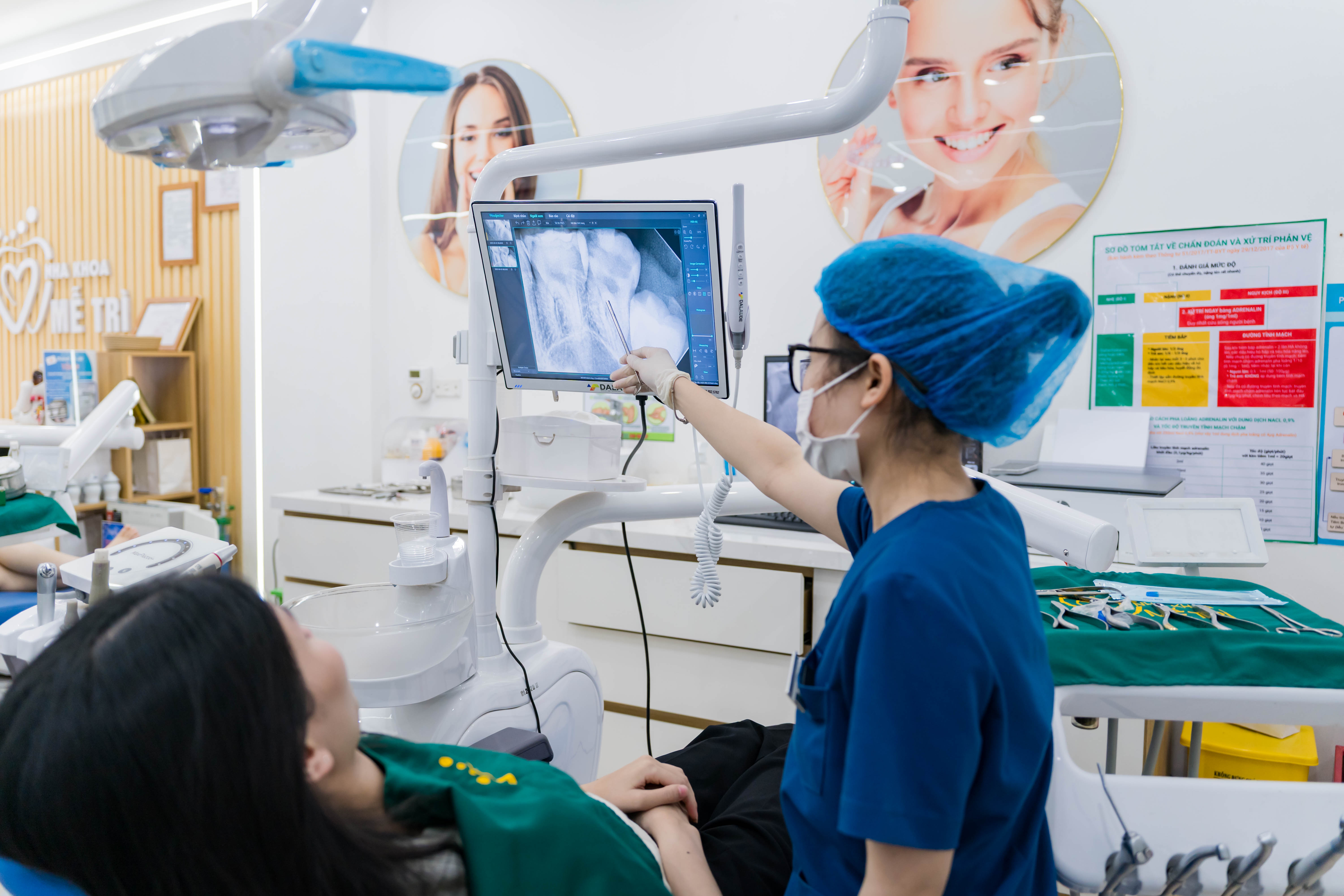
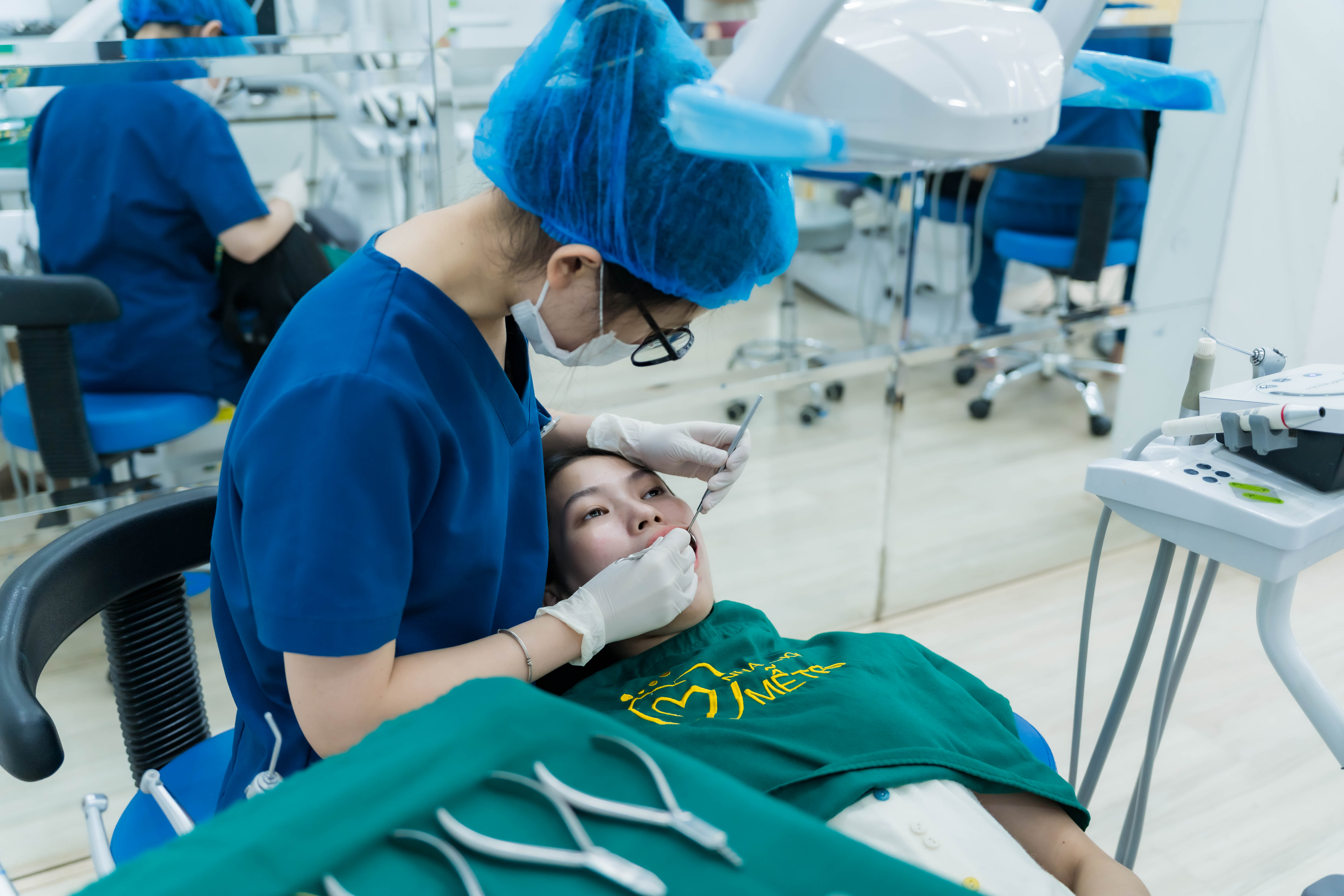
Image of a dentist performing cosmetic dental restoration at the clinic
At-Home Care After Restoration
- Brush gently twice a day with a soft-bristled toothbrush
- Use dental floss, avoid wooden toothpicks
- Limit very hard, hot, or cold foods
- Schedule regular dental check-ups every 6 months
- Do not use restored teeth to bite hard objects
Preventing Post-Restoration Issues
- Maintain good oral hygiene
- Avoid bad habits like teeth grinding or nail biting
- Control underlying health conditions (if any)
- Follow your dentist's instructions precisely
When Should You See Your Dentist Immediately?
- Persistent pain that does not subside after a few days
- Crown/veneer becomes loose, debonded, or fractured
- Swollen gums, bleeding, or persistent bad breath
- Feeling of bulkiness, bite misalignment, or discomfort when chewing
Checklist: 5 Steps to Help You Choose the Right Method
- Assess your current tooth condition (still strong or already weak/large fracture?)
- Determine your aesthetic and functional needs (just appearance or also chewing function?)
- Consult with a prosthodontic specialist
- Learn about the procedure, pros, and cons of each method
- Commit to proper care and regular follow-up visits
Frequently Asked Questions (FAQ)
1. Are porcelain veneers as durable as dental crowns?
Veneers are durable (10-15 years) if the underlying tooth is healthy and proper care is taken, but they are not as strong as crowns for weak or heavily damaged teeth.
2. Is getting veneers painful?
The veneer procedure is minimally invasive and usually only causes mild sensitivity for 1-2 days, with prolonged pain being rare.
3. Do dental crowns always require root canal treatment?
Root canal treatment is only needed if the tooth has pulpitis or deep damage. Most crowns do not require root canal if the tooth is still vital.
4. Can I eat normally after restoration?
After completion, you can eat normally but should avoid very hard or sticky foods to protect the restoration.
5. Which ceramic material should I choose?
It depends on the tooth location, aesthetic needs, and budget. Your dentist will recommend the most suitable material for your case.
You should visit your dentist for a direct consultation to receive the safest, most optimal, and personalized solution for your dental condition. Learn more about Porcelain Veneers or Dental Crowns if you want to explore further.
Dịch vụ liên quan
Phục hồi răng hư tổn bằng mão sứ bền chắc và thẩm mỹ.
Mặt dán sứ mỏng giúp cải thiện màu sắc và hình thể răng theo hướng bảo tồn.
Chủ đề liên quan
Khu vực phục vụ
Bạn cần lộ trình điều trị phù hợp?
Đặt lịch tư vấn với đội ngũ tại Mễ Trì, Hà Nội hoặc xem trước các dịch vụ trước khi đến khám.