
Replacing Several Missing Teeth: Individual Implants or an Implant-Supported Bridge?
Missing several adjacent teeth? Learn when separate Implant crowns or an Implant-supported bridge may be considered, and why the final design depends on more than tooth count.
Me Tri Dental Clinic
September 20, 2026
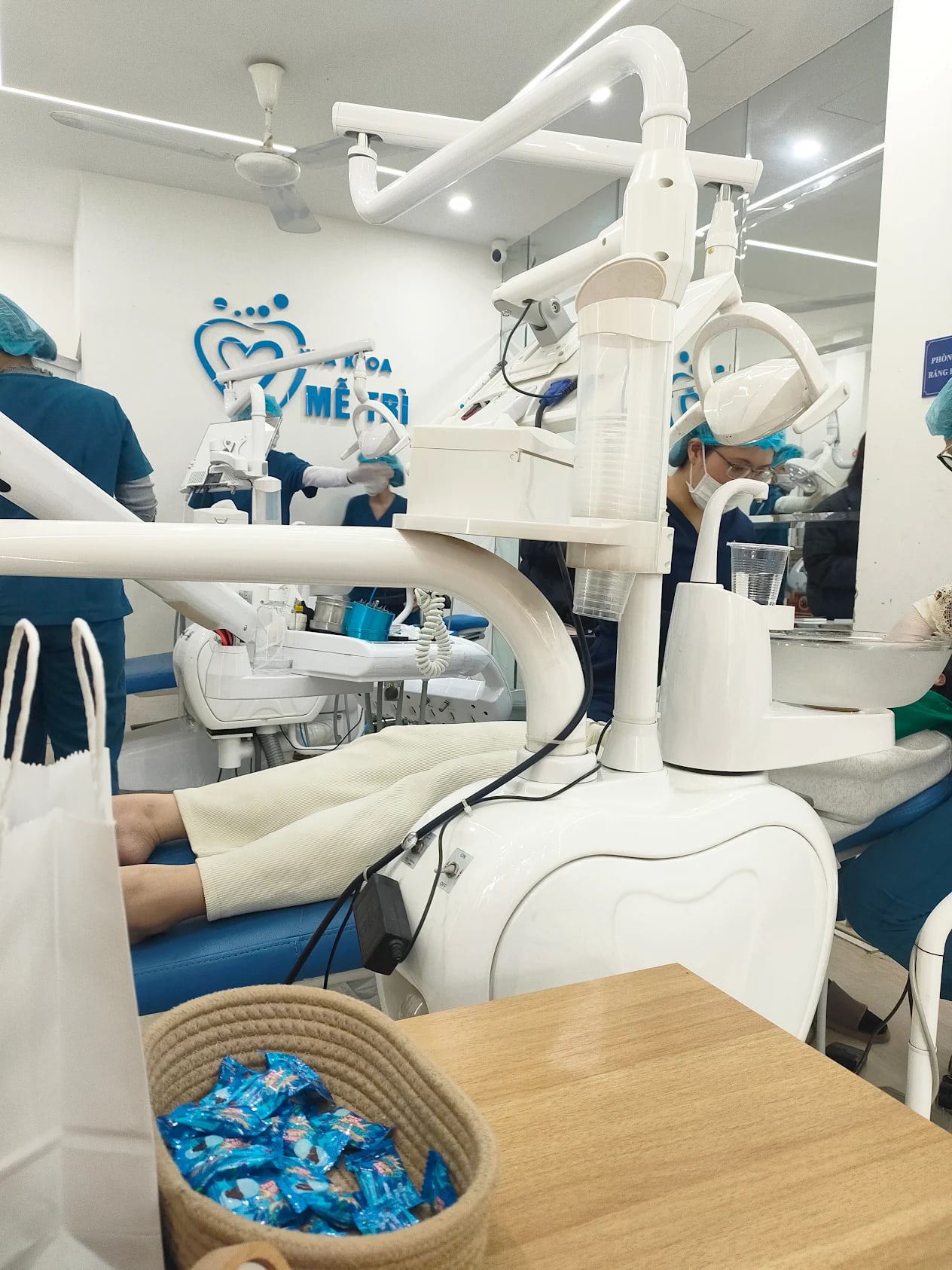
If several adjacent teeth are missing, you do not automatically need one Dental Implant for every missing tooth. Some patients may receive separate Implants supporting individual crowns, while others may be better treated with an Implant-supported bridge in which strategically positioned Implants support several replacement teeth.
For example, three adjacent missing teeth might sometimes be restored with three individual Implants or with a bridge supported by fewer Implants. This illustrates the design principle, not a universal treatment formula.
The number and position of Implants should be determined by the restorative plan, available bone, spacing, bite and chewing forces, Implant-site anatomy, appearance requirements, and the patient's ability to clean the final restoration.
Multiple-tooth Implant treatment at Me Tri Dental Clinic is individually quoted. Do not calculate the expected cost simply by multiplying the single-tooth Implant package price by the number of missing teeth.
Individual Implants vs Implant-supported bridge at a glance
The exact Implant number cannot be selected from the number of missing teeth alone.
Missing several teeth in the same area? The first step is to plan the complete replacement segment, then determine how many Implants are actually required to support it.
What options are available when several adjacent teeth are missing?
This article focuses on a partial segment of adjacent missing teeth rather than a complete upper or lower arch. When most or all teeth in an arch need replacement, full-arch Implant treatment follows a different planning approach.
Separate Implant-supported crowns
Implants are placed at planned tooth positions and each supports its own final crown when spacing, anatomy, bone, and restorative planning permit. In this design, the restorations are independent rather than connected to each other.
Implant-supported bridge
Two or more Implants support a connected restoration replacing several adjacent teeth. The number of replacement teeth can be greater than the number of Implant fixtures in selected designs.
An Implant-supported bridge is different from a conventional tooth-supported bridge because the bridge is supported by Implants rather than neighboring natural teeth. If you are comparing treatment for exactly one missing tooth, see Dental Implant vs dental bridge for one missing tooth.
Neither approach should be selected by a simple rule such as "one missing tooth equals one Implant" or "fewer Implants are always better." The complete restorative plan comes first.
How do individual Implants replace several teeth?
When several missing teeth are restored independently, each planned Implant supports its own crown rather than being connected to neighboring Implant restorations.
Possible advantages include:
- each restoration can function as an individual unit
- cleaning access may resemble separate teeth when anatomy and spacing permit
- assessment of one restorative unit may sometimes be more localized
- no bridge pontic is required between two supporting Implants when every missing tooth is independently restored
Potential considerations include:
- more Implant fixtures may be required
- suitable bone is needed at each planned Implant site
- adequate spacing is needed between Implants and neighboring structures
- there may be more surgical sites
- treatment and restorative complexity may increase
- total cost may increase, depending on the complete plan
The practical advantage of independent restorations depends on the final design and clinical situation. Separate crowns are not automatically easier to repair, cleaner, stronger, or better for every patient.
For broader information about the clinic's Implant service, see Dental Implants in Hanoi.
How does an Implant-supported bridge replace several teeth?
An Implant-supported bridge uses strategically positioned Implant fixtures to support a connected row of replacement teeth. Some replacement teeth are directly supported by Implants, while another replacement tooth may form part of the bridge between or adjacent to those supports according to the restorative design.
The important distinction is that the bridge is supported by Implants, not by healthy neighboring natural teeth.
A bridge may allow the dentist to avoid placing an Implant at every missing-tooth position, but that does not mean the fewest possible Implants should always be used. Support, Implant distribution, bite forces, restorative space, and cleaning access all need to work together.
Do you need one Implant for every missing tooth?
No. Several adjacent missing teeth can sometimes be restored with fewer Implants than missing teeth by using an Implant-supported bridge.
This does not mean fewer Implants are always preferable. The dentist determines the appropriate number and distribution from the restorative design, bone, spacing, bite, expected forces, and anatomy.
The correct question is not simply how many teeth are missing. It is how the replacement teeth should be supported so the final restoration can function, look appropriate, and be maintained over time.
If three teeth are missing, do you need three Implants?
Not necessarily. One possible plan is three individual Implants with three separate crowns. Another possible plan is an Implant-supported bridge in which fewer strategically positioned Implants support three replacement teeth.
This example explains possible restorative designs. It does not mean every three-tooth gap should be restored with the same number of Implants.
Planning may consider:
- the width of the missing-tooth space
- which teeth are missing
- available bone at each possible Implant position
- proximity to anatomical structures
- Implant dimensions and spacing
- bite and expected chewing load
- gum and soft-tissue shape
- hygiene access
- aesthetic requirements
Two Implants supporting three replacement teeth can be one possible design in selected cases, but it is not a universal formula.
Why doesn't every missing tooth automatically need its own Implant?
Implant treatment is restoration-driven, not merely fixture-count-driven.
The dentist plans:
- which teeth need replacement
- where the final replacement teeth should sit
- what chewing forces they need to tolerate
- where Implants can be predictably positioned
- how the restoration can be cleaned
- how the patient can maintain it long term
Only after these questions are addressed should the number and position of Implants be finalized.
More Implant fixtures do not automatically mean a better treatment plan.
A plan with more fixtures still needs appropriate spacing, bone, restorative proportions, hygiene access, and a sound reason for each Implant position.
Why not always use the fewest possible Implants?
Using fewer Implant fixtures can be appropriate in a well-designed bridge, but the restoration still needs adequate support and favorable Implant distribution for the expected forces.
The dentist may consider:
- the length of the missing-tooth span
- Implant positions
- bite and opposing teeth
- available bone
- restorative space
- hygiene access
- expected mechanical loading
There is no universal minimum fixture number that can be selected from the number of missing teeth alone.
How does available bone affect the design?
Individual Implants require suitable Implant sites at each planned fixture position.
An Implant-supported bridge may sometimes allow the dentist to select Implant positions according to available bone, anatomy, restorative design, and support distribution rather than placing one Implant at every former tooth position.
However, a bridge does not eliminate the need for adequate bone.
Every planned Implant still requires appropriate bone and anatomical conditions at its placement site.
Depending on the location, planning may also consider the maxillary sinus, nerves, neighboring tooth roots, ridge width, ridge height, and available restorative space. Implant positions should follow both anatomy and the requirements of the final teeth.
Why is CBCT important when several Implants are being planned?
CBCT can help assess bone volume, ridge anatomy, important nearby structures, and potential Implant positions.
The restorative plan also considers the intended tooth positions, bite, appearance, and cleaning access. This is why Implant planning cannot be reduced to counting gaps on a dental chart.
At Me Tri Dental Clinic, CBCT used as part of the confirmed Implant treatment plan is included according to the clinic's Implant package context. A standalone CBCT outside the package should not automatically be treated as a routine additional Implant charge.
Implants also cannot simply be placed wherever each missing tooth used to be. Adequate spacing and surrounding bone are required, and the final replacement teeth need appropriate proportions and cleaning access.
Why does your bite affect the number of Implants?
The restoration needs to tolerate the forces created by chewing and the patient's bite.
Planning may consider:
- tooth position
- opposing teeth or restorations
- bite pattern
- expected chewing load
- parafunction such as bruxism when relevant
More Implants do not automatically mean forces will be managed better, and fewer Implants do not automatically mean a restoration will be less stable.
Implant number and distribution need to work together with the planned bridge or crowns.
Which is easier to clean?
There is no universal winner. Cleaning depends on Implant position, restoration contours, gum shape, access, and the patient's ability to use the recommended cleaning methods.
Separate Implant crowns
When anatomy and spacing are favorable, the patient may be able to clean between restorations similarly to individual teeth using appropriate interdental methods.
Separate Implant crowns may offer more tooth-like cleaning access when spacing and gum anatomy permit, but this is not guaranteed.
Implant-supported bridge
Cleaning needs to include:
- around the Implant-supported parts
- along the gum line
- beneath connected bridge areas where a replacement tooth does not have its own Implant
Depending on the design, patients may use floss threaders, interdental brushes, or other tools recommended by the dentist.
An Implant-supported bridge requires a different cleaning technique because connected restorations include areas that need cleaning underneath. This does not make Implant bridges inherently unhygienic. Successful maintenance depends on appropriate design, realistic access, and consistent care.
The restoration should be designed not only to replace teeth, but also to allow realistic daily cleaning.
Why can hygiene affect the restorative design?
A technically possible restoration is not useful if the patient cannot maintain it.
The dentist may need to consider hand skills, access, bridge contour, the space underneath replacement teeth, Implant positions, and long-term professional maintenance.
This is one reason the restorative design should be planned before the final Implant number is chosen.
Does an Implant-supported bridge mean less surgery?
It may involve fewer Implant placement sites than restoring every missing tooth with an individual Implant, but the actual surgical complexity depends on Implant positions, extraction needs, bone condition, and any additional procedures.
One fewer Implant fixture does not automatically mean a simpler overall case.
Bone grafting and sinus treatment
Bone grafting may be needed when available bone is insufficient at a required Implant position. It is not routine for every patient, and neither a bridge nor separate crowns automatically determines whether grafting is needed.
Confirmed clinic fees when clinically necessary include:
- particulate bone graft: VND 2,000,000-5,000,000 per bone unit
- block bone graft: VND 5,000,000
- closed sinus lift: VND 2,000,000 per tooth
- open sinus lift: VND 5,000,000 per tooth
Bone graft material, membranes, or other biomaterials may be charged separately depending on type and quantity.
An Implant-supported bridge does not automatically avoid grafting, and separate crowns do not automatically require more grafting.
What does treatment usually involve?
A multiple-tooth Implant case may involve the following stages, although not every patient follows exactly the same sequence:
- Implant examination
- CBCT and restorative planning
- treatment of active disease when needed
- extraction when required
- bone or sinus treatment when required
- Implant placement
- healing and osseointegration
- restorative scan or impression
- fabrication of individual crowns or an Implant-supported bridge
- final restoration fitting
- maintenance
Both individual Implant crowns and Implant-supported bridges require Implant surgery and biological healing.
For a more detailed discussion of treatment timing, see how long Dental Implant treatment takes.
Can several Implants be placed at the same appointment?
Yes, several planned Implants can often be placed during the same surgical treatment stage when the clinical plan permits.
Whether this is appropriate depends on the number and location of Implants, extractions, bone procedures, medical factors, and the overall surgical plan.
This does not guarantee that all Implants will always be placed in one visit, that a temporary fixed restoration will be fitted immediately, or that final teeth can be delivered on the same day.
Immediate Implant placement after extraction
If several teeth are being extracted, immediate Implant placement at the time of extraction may be possible at selected sites when bone, infection status, anatomy, and primary stability are appropriate.
Not every extraction site in the same segment should be assumed to be suitable for immediate Implant placement.
Can you have temporary teeth while several Implants heal?
A temporary restoration may be provided when it forms part of the confirmed treatment plan and Implant stability and restorative conditions permit.
Temporary and final restorations are different. Multiple Implant placement does not automatically mean immediate fixed temporary teeth, and temporary teeth do not mean the final bridge or crowns can be fitted immediately.
Dental Implants require a biological healing period before the final restorative stage in a conventional treatment pathway. A typical Implant treatment period is often measured in months rather than weeks.
Are individual Implants or an Implant bridge faster?
The restoration type alone does not determine the overall treatment time. Both approaches require Implant placement and healing.
Treatment duration may depend more on:
- extraction
- Implant stability
- bone grafting
- sinus treatment
- number and position of surgical sites
- soft-tissue healing
- restorative complexity
An Implant-supported bridge is not automatically faster simply because it may use fewer fixtures.
What is the main advantage of separate Implant crowns?
Separate Implant crowns can provide individually restored teeth when anatomy, spacing, and Implant positioning support that design.
If one restorative component later needs assessment, it may sometimes be managed more independently than a connected bridge. However, this depends on the exact restoration design and does not guarantee an easy or isolated repair in every case.
What is the main advantage of an Implant-supported bridge?
An Implant-supported bridge can replace several adjacent teeth without necessarily placing one Implant at every missing-tooth position.
This may:
- reduce the number of Implant fixtures required
- allow Implant positions to be planned strategically
- provide a fixed replacement for several teeth
Fewer fixtures do not automatically make the treatment simpler, cheaper, or better.
The value of the bridge comes from a suitable restorative design, not simply from reducing fixture count.
Which costs less: individual Implants or an Implant-supported bridge?
There is no universal answer.
The final cost depends on factors such as:
- number of Implants
- Implant system
- number of replacement teeth
- restorative design
- restorative material when confirmed
- surgical complexity
- extractions
- bone grafting
- sinus treatment
- temporary restoration when needed
- laboratory work
- other required treatment
An Implant-supported bridge may use fewer Implant fixtures, but do not assume that its total cost is simply the price of fewer single-tooth Implant packages.
Multiple-tooth Implant treatment is individually quoted after the number of Implants, number of replacement teeth, and final restorative design are confirmed.
The clinic publishes complete standard prices for straightforward single-tooth Implant packages, but these prices should not be multiplied to estimate a multiple-tooth or Implant-supported bridge case. For general pricing context, see Dental Implant costs in Hanoi.
Published clinic prices exclude VAT. VAT is added only when a patient requests a VAT invoice.
What should you check in a quotation for several missing teeth?
A useful quotation should make the treatment design clear rather than presenting only one headline total.
Check:
- how many missing teeth are being replaced
- how many Implant fixtures are proposed
- where each Implant will be positioned
- which Implant system is proposed
- whether the restorations are separate or connected
- whether a temporary restoration is planned when required
- the final restorative design
- CBCT and planning included in the confirmed treatment
- any additional bone treatment
- any additional sinus treatment
- follow-up requirements
- Implant fixture warranty
- VAT treatment when an invoice is requested
Published Implant warranty periods apply to the Implant fixture. Do not assume the same warranty period automatically applies to the final crown, Abutment, pontic, or entire Implant-supported bridge.
Does the design change when several front teeth are missing?
Front-tooth segments can add aesthetic and soft-tissue considerations such as:
- smile line
- gum contour
- tooth proportions
- Implant spacing
- temporary appearance
- soft tissue
- symmetry
- speech and phonetics
Individual Implants are not automatically more aesthetic, and a bridge is not automatically better in the front teeth. In some anterior gaps, Implant spacing and gum aesthetics can make planning more demanding.
The final appearance is influenced by the restorative design and surrounding tissues, not just the number of Implant fixtures.
What about several missing back teeth?
Back-tooth planning may place greater emphasis on chewing load, Implant distribution, available bone, sinus anatomy in the upper posterior jaw, cleaning access, and restorative space.
Again, the number of Implants should be determined from the complete functional and restorative plan.
What if the teeth have been missing for years?
Long-standing tooth loss does not automatically prevent either approach, but the bone and soft tissues may have changed since the teeth were lost.
Assessment may consider:
- bone volume
- ridge shape
- gum tissue
- available restorative space
- movement of neighboring or opposing teeth
- bite
Grafting should not be assumed simply because the teeth have been missing for a long time.
What if neighboring natural teeth are healthy?
Both individual Implant crowns and an Implant-supported bridge are Implant-supported.
Neither option normally requires healthy neighboring natural teeth to serve as conventional bridge supports.
This is different from the conventional tooth-supported bridge discussed in the one-missing-tooth guide.
If neighboring teeth also need treatment, the overall plan may combine Implant-supported restorations with treatment such as crowns on natural teeth, periodontal treatment, extraction, or other restorative care. Natural teeth and Implants should not automatically be connected in the same bridge; that is a more specialized restorative design question.
Medical and oral-health factors still matter
Suitability for several Implants also considers the same factors relevant to Implant treatment generally, including systemic health, diabetes control, medications, smoking, oral hygiene, periodontal health, bone, anatomy, bite, and bruxism.
Smoking increases Implant and peri-Implant risk and should be discussed during treatment planning, particularly when several Implant sites are involved.
Active periodontal disease should be controlled before Implant placement, regardless of whether the final restoration will use separate crowns or an Implant-supported bridge.
Do both options need maintenance?
Yes.
Both require:
- daily plaque control
- appropriate interdental or under-bridge cleaning
- routine dental review
- professional maintenance as recommended
- monitoring of the tissues around the Implants
- monitoring of the bite and restorative components
Dental Implants are not maintenance-free.
If one restoration later needs treatment, separate crowns may sometimes allow more localized assessment depending on the design. With an Implant-supported bridge, because the restoration is connected, assessment or repair may involve part or all of the bridge depending on the issue.
Neither statement should be turned into a rule that separate crowns are always easier or cheaper to repair, or that a whole bridge must always be replaced when one component has a problem.
Which design might be considered?
This table is a discussion framework, not an automatic treatment-selection algorithm.
A simple way to think about the choice
Individual Implant crowns prioritize independent replacement of each planned tooth position.
An Implant-supported bridge prioritizes replacing the entire missing-tooth segment using strategically positioned Implant supports.
The correct question is therefore not "How many teeth are missing?" but "What Implant and restoration design will provide appropriate support, appearance, cleaning access, and long-term maintenance for this gap?"
That is the central planning principle.
Questions to ask before replacing several missing teeth
- How many teeth need replacement?
- Do they form one continuous gap?
- How many Implant fixtures are being proposed?
- Why is that number appropriate?
- Where will each Implant be positioned?
- Will the final teeth be individual crowns or a connected bridge?
- Is bone adequate at each proposed Implant position?
- Is grafting required?
- How will I clean the restoration?
- What temporary restoration is planned during healing?
- What is included in the quotation?
- Which items may be additional?
- What does the Implant fixture warranty cover?
- What maintenance will the final restoration require?
- What could change the treatment plan?
International patient planning
When several Implants and a larger restoration are involved, planning can be more complex than a straightforward single-tooth case.
Pre-arrival records may help with a preliminary discussion, but international patients should not assume that treatment can be completed in one short visit. Final planning requires an appropriate in-person clinical assessment.
If you already have panoramic X-rays, CBCT data, extraction records, previous Implant information, or a treatment plan, send what you already have before travelling. See dental records to send before Implant treatment abroad for a focused checklist.
Can multiple-tooth Implant treatment be planned in English?
Yes. Consultation, treatment planning, cost explanation, aftercare, and follow-up communication are available in English at Me Tri Dental Clinic.
This is especially useful when the treatment involves several Implant sites, a connected restoration, staged treatment, or a return trip for the final restorative phase.
Frequently asked questions
Do I need one Implant for every missing tooth?
No. Several adjacent missing teeth can sometimes be restored using an Implant-supported bridge with fewer Implant fixtures than replacement teeth. The appropriate number and position of Implants depends on the complete restorative plan.
Can two Implants replace three missing teeth?
This can be one possible Implant-supported bridge design in selected cases, but it is not a universal rule. Bone, Implant positions, spacing, bite, restorative design, and expected loading must be assessed before the number of Implants is confirmed.
Is one Implant per tooth better?
Not automatically. Separate Implant crowns can provide individually restored teeth when anatomy and spacing permit, but more Implant fixtures do not automatically produce a better treatment result.
Is an Implant-supported bridge better?
Not automatically. An Implant-supported bridge can replace several teeth with strategically positioned Implants, but suitability depends on the missing-tooth span, bone, bite, hygiene access, and restorative requirements.
What is the difference between an Implant bridge and a normal dental bridge?
An Implant-supported bridge is supported by Dental Implants. A conventional tooth-supported bridge relies on natural neighboring teeth for support.
Which option requires less surgery?
An Implant-supported bridge may use fewer Implant placement sites than one-Implant-per-tooth treatment, but the overall surgical complexity depends on Implant positions, extraction requirements, bone, and any additional procedures.
Which option is easier to clean?
It depends on the restorative design. Separate Implant crowns may provide more individual cleaning access when spacing permits, while an Implant-supported bridge requires cleaning underneath connected bridge areas as well as around the Implant supports.
Which costs less?
There is no universal answer. Multiple-tooth Implant treatment is quoted according to the number of Implants, number of replacement teeth, restorative design, and any additional procedures. Do not estimate the price by multiplying the single-tooth Implant package.
How long does treatment take?
Both designs require Implant placement and healing. The total timeline depends on extraction, Implant stability, bone treatment, healing, and restorative complexity rather than simply whether the final restoration is separate crowns or a bridge.
Do Implant bridges require bone grafting?
Not automatically. Bone grafting is considered only when available bone is insufficient at a planned Implant position or for the confirmed treatment design.
Can several Implants be placed in one appointment?
Yes, several planned Implants can often be placed during the same surgical stage when the treatment plan and clinical conditions permit.
Can I have temporary teeth while the Implants heal?
A temporary restoration may be provided when it forms part of the confirmed treatment plan and Implant stability and restorative conditions permit it.
How do I know how many Implants I need?
The dentist first plans the replacement teeth, assesses CBCT and clinical findings, then determines the Implant positions and number required to support that restoration. The number should not be chosen from the missing-tooth count alone.
Plan the replacement teeth first, then determine how many Implants are actually needed
If several adjacent teeth are missing, Me Tri Dental Clinic can assess the gap, bone, Implant positions, bite, and cleaning requirements before comparing separate Implant crowns with an Implant-supported bridge and preparing an individual treatment quotation.
Related services
Related topics
Dental Implant vs Dental Bridge for One Missing Tooth
September 13, 2026

Single-Tooth Dental Implants in Hanoi: Procedure, Cost and Recovery
September 6, 2026

What Dental Records Should You Send Before Implant Treatment Abroad?
September 1, 2026
Need a treatment plan that fits your case?
Book a consultation with our team in Me Tri, Hanoi, or review services before your visit.