
How Long Do Dental Implants Take? Typical Treatment Stages
Dental implant treatment commonly takes several months—often around 6 months or longer—depending on jawbone quality, healing, infection control and whether bone grafting is needed. Learn what each stage involves and how to plan treatment in Hanoi.
Me Tri Dental Clinic
July 18, 2026
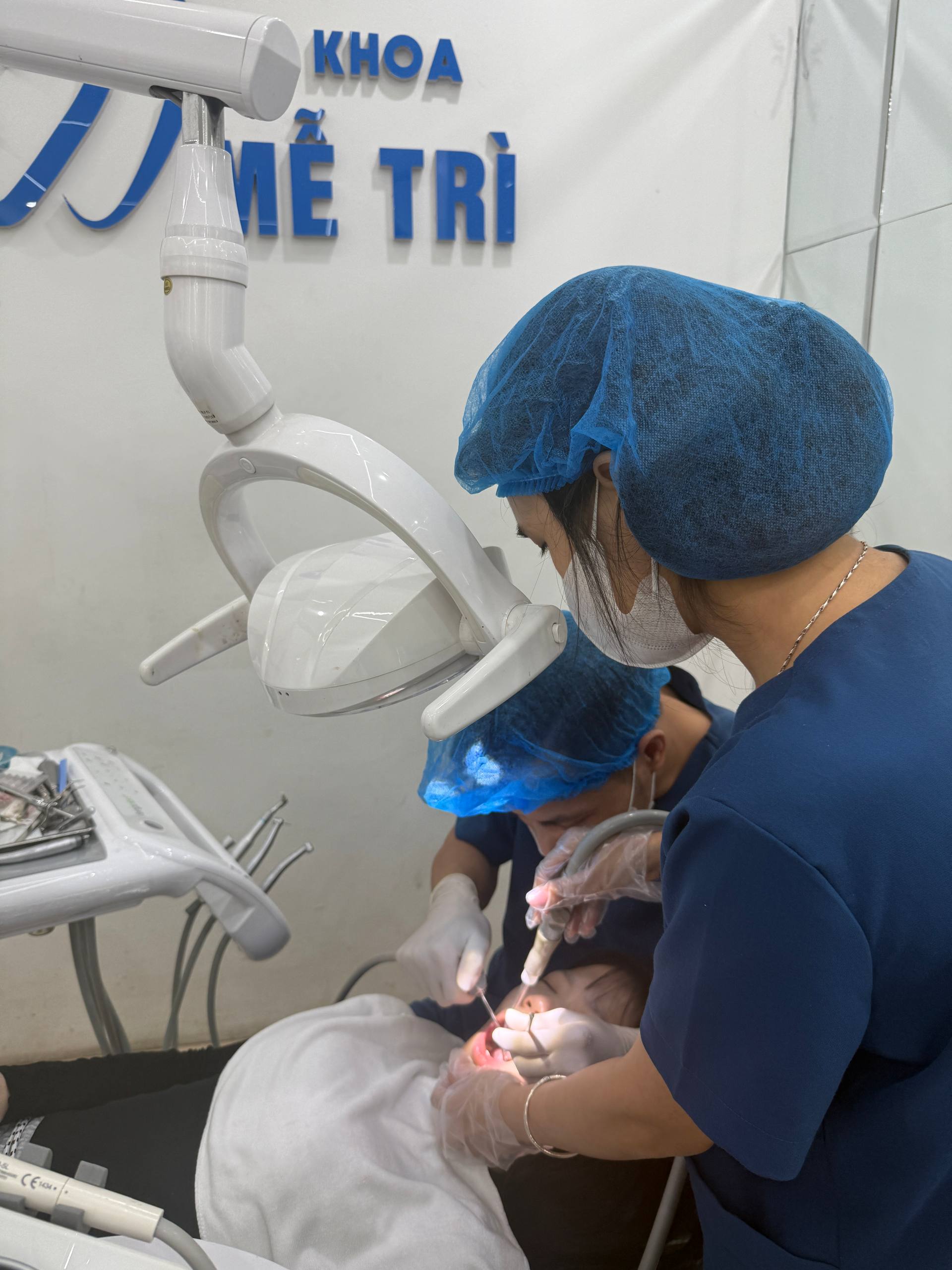
Dental implant treatment commonly takes several months, often around 6 months or longer. The overall timeline depends on your jawbone quality, the location of the missing tooth, infection or gum disease, individual healing, and whether bone grafting is required. Placing one implant fixture may take only 30–60 minutes, but treatment also includes time for the implant to integrate with the jawbone and for the final crown to be made and fitted.
If you hear an offer for “same-day implants,” ask exactly what is included: implant placement, a temporary tooth, or the final permanent crown. A reliable timeline can only be confirmed after an in-person examination and Cone Beam CT scan.
For international patients planning dental care in Hanoi, it is especially important to allow enough time in your travel schedule for follow-up visits and healing. Your dentist can advise whether treatment can be staged around your stay in Vietnam.
What Makes Up the Dental Implant Timeline?
An implant plan is not measured only by time in the dental chair. There are usually three main time periods:
- Implant placement: The surgical appointment where the implant fixture is inserted into the jawbone. For a single implant, this often takes around 30–60 minutes, although complex cases may take longer.
- Healing and osseointegration: The jawbone needs time to bond securely with the implant surface, creating a stable foundation for long-term chewing forces. This stage commonly takes around 2–6 months.
- Final crown restoration: Once the dentist confirms that the implant is stable, one or more appointments may be needed for impressions or digital scans, crown try-in, bite adjustments and final cementation or attachment.
Not every patient follows the same schedule. The priority is a stable implant and healthy surrounding tissues—not shortening the timeline at all costs.
Typical Dental Implant Treatment Timeline
What Happens at Each Stage of Implant Treatment?
Examination and treatment planning
The dentist examines the missing-tooth area, gum health, adjacent teeth, bite and any teeth-grinding habit. A Cone Beam CT scan helps assess bone volume and density, important anatomical structures, and whether implant placement is feasible.
At this stage, you should be told whether the implant can be placed immediately, whether inflammation needs treatment first, or whether bone grafting is needed. It is also a good time to discuss a temporary tooth if the missing tooth affects speaking or appearance.
Preparing your oral health before implant surgery
If there is a severely infected tooth that cannot be saved, uncontrolled gingivitis or periodontitis, the dentist may treat these issues first. When a tooth needs extraction, the timing of implant placement is not fixed: some cases may be suitable for early or immediate placement, while others need time for the socket and surrounding tissues to heal.
A delay does not mean treatment has failed or is being postponed unnecessarily. It may be the safer approach when there is infection, insufficient bone or unfavorable soft-tissue conditions.
Bone grafting or sinus lift, when needed
Long-term tooth loss can be associated with jawbone loss. In the upper back jaw, the maxillary sinus can limit the available bone height. If there is not enough bone for safe implant placement, your dentist may consider bone grafting or a sinus lift.
These procedures can extend the overall implant timeline because extra healing and monitoring may be necessary. In some cases, grafting and implant placement can be performed together; in others, they need to be completed in separate stages. The number of years a tooth has been missing alone cannot predict the timeline—an examination and CT scan provide a more accurate answer.
Implant placement and osseointegration
After implant placement, the soft tissues usually undergo an initial healing period of around 1–2 weeks. However, reduced swelling or discomfort does not mean the implant is ready for a permanent tooth that will carry long-term biting forces. Osseointegration typically takes around 2–6 months, depending on the location and biological conditions.
During this period, the dentist may place a healing cap, schedule follow-up checks or take impressions/scans at an appropriate time. In selected plans, a temporary tooth may be considered. It must be carefully designed and adjusted so that it does not put harmful chewing pressure on the newly placed implant.
Abutment and final ceramic crown
Once the implant meets the stability criteria assessed by your dentist, the final restoration phase begins. This may include an impression or digital scan, crown try-in, shade and shape checks, and bite adjustments before the crown is permanently fitted.
For an overview of indications, treatment steps and restoration options, see Dental Implants. In practice, the timing of the final crown should always be individualized rather than based on a single standard deadline.
How Timelines Differ Between Implant Cases
Replacing one missing tooth
When the missing-tooth site has healthy bone and gums with no infection, the plan is often more straightforward than replacing several teeth. Even so, time is still needed for osseointegration and for the final crown appointments.
Immediate implant placement after extraction
Placing an implant immediately after extraction may be suitable for some patients, but it is not the default choice. The dentist needs to consider why the tooth was lost, the degree of infection, the condition of the socket walls, initial implant stability and the ability to control biting forces. “Immediate” does not always mean that a permanent final crown is completed on the same day.
Long-term tooth loss or significant bone loss
These cases may require more detailed assessment of the bone, gums and space for the final restoration. If bone grafting or a sinus lift is required, the overall treatment schedule is usually longer.
Full-arch implants
Full-arch restoration requires more detailed planning because it involves multiple implants, the relationship between the upper and lower jaws, bite, appearance and long-term hygiene. The number of appointments and monitoring period may differ substantially from a single-tooth implant.
Front teeth versus back teeth
Front-tooth implants often require particularly careful management of the gum line and appearance. Back teeth experience greater chewing forces and have different anatomical considerations. For this reason, it is not appropriate to compare timelines between these areas based only on another person’s experience.
Factors That Can Make Implant Treatment Take Longer
The treatment duration may be affected by:
- Jawbone volume and density at the missing-tooth site.
- Whether bone grafting or a sinus lift is needed.
- Untreated gum inflammation, periodontal disease or infection.
- Implant location and the number of implants required.
- General health, especially medical conditions that need to be well controlled.
- Smoking, poor oral hygiene or teeth grinding.
- Individual healing and adherence to post-operative instructions.
If you have diabetes, take long-term medication or have a medical condition, do not assume that implants are automatically unsuitable. Provide your dentist with complete information about your health and all medications or supplements you use. This allows the team to assess suitability, timing and any necessary precautions.
When Can You Eat After an Implant, and Do You Need Time Off Work?
After implant placement, when and what you can eat should follow your surgeon’s individual instructions. In general, patients are usually advised to choose soft foods, avoid chewing firmly on the new implant site, and avoid biting hard foods with that area until they are cleared to do so.
Many people can return to light work relatively soon. However, the need for rest depends on the number of implants, whether bone grafting was performed, swelling and discomfort, the nature of your work and your general health. If your job involves heavy physical activity, frequent travel or continuous speaking, ask your dentist in advance so you can plan accordingly.
For visitors receiving implant treatment in Hanoi, discuss your return-flight date and onward travel plans before surgery. Your dentist can help you schedule appropriate reviews and advise whether you should remain in Hanoi for monitoring.
Contact the clinic sooner than scheduled if pain or swelling is increasing, bleeding continues, you develop a fever, notice a pronounced bad taste or odor, feel that the implant or temporary tooth is loose, or experience any other unusual symptom. Do not self-medicate or manipulate the surgical area in an attempt to speed healing.
Planning Checklist for Your Implant Consultation
Before your consultation, consider preparing the following information:
- Note when the tooth was lost, why it was lost and any current symptoms.
- Bring previous X-rays or dental records if available; the dentist may still recommend new imaging.
- List medical conditions, medication allergies and all medicines or supplements you take.
- Mention smoking, teeth grinding or a history of periodontal disease.
- Ask which stages are included in your plan: extraction, infection treatment, bone grafting or sinus lift, if applicable.
- Confirm whether a temporary tooth is needed and how to avoid harmful biting forces during healing.
- Attend review appointments as scheduled; do not skip checks simply because the pain has settled.
Frequently Asked Questions
Can I have an implant and a tooth fitted on the same day?
Some patients may be able to have an implant placed with an early temporary tooth or an early restoration plan. However, this depends on implant stability, bone quality, gum condition, bite and loading risk. A final crown intended for long-term chewing is usually decided after the dentist evaluates healing.
How long after implant placement can the final crown be fitted?
The osseointegration period is commonly around 2–6 months, followed by one or more appointments to make and fit the final crown. The exact timing may be shorter or longer depending on your condition and treatment plan.
How much extra time does bone grafting add?
Bone grafting can lengthen treatment because additional healing time and bone assessment may be needed before or after implant placement. The extra time differs between cases and depends on how much bone needs to be rebuilt and whether grafting is performed at the same time as implant surgery.
Can I still get an implant if my tooth has been missing for years?
Long-standing missing teeth can still be considered for implant treatment, but bone loss and gum changes may be more likely. A clinical examination and Cone Beam CT scan help determine whether the bone or gums need preparation and whether treatment should be completed in stages.
How soon do I need check-ups after implant surgery?
Your dentist will set follow-up appointments for each stage. There is usually an early healing review and further assessments before the final crown is made. After treatment is complete, implants still need regular check-ups and proper oral hygiene.
Conclusion
Whether implants take a long time depends mainly on osseointegration and whether preparatory treatment is needed—not simply on the duration of the implant surgery itself. With a well-planned schedule, you can better organize work, travel and daily life while avoiding the expectation that every case can be completed in one visit. An examination and CT scan are essential for establishing a safe, realistic timeline for your individual missing-tooth situation.
Related services
Related topics
Dental Implant vs Dental Bridge for One Missing Tooth
September 13, 2026

Single-Tooth Dental Implants in Hanoi: Procedure, Cost and Recovery
September 6, 2026

What Dental Records Should You Send Before Implant Treatment Abroad?
September 1, 2026
Need a treatment plan that fits your case?
Book a consultation with our team in Me Tri, Hanoi, or review services before your visit.